01 / 11
WORK
An unended war, a hidden memory,
replayed through the voices of women
THE STORY
"Back then,
there was a monster
living inside us all…"
Autumn night, 2016.
A spicy fish stew restaurant
near Lake Okjeong, Imsil.
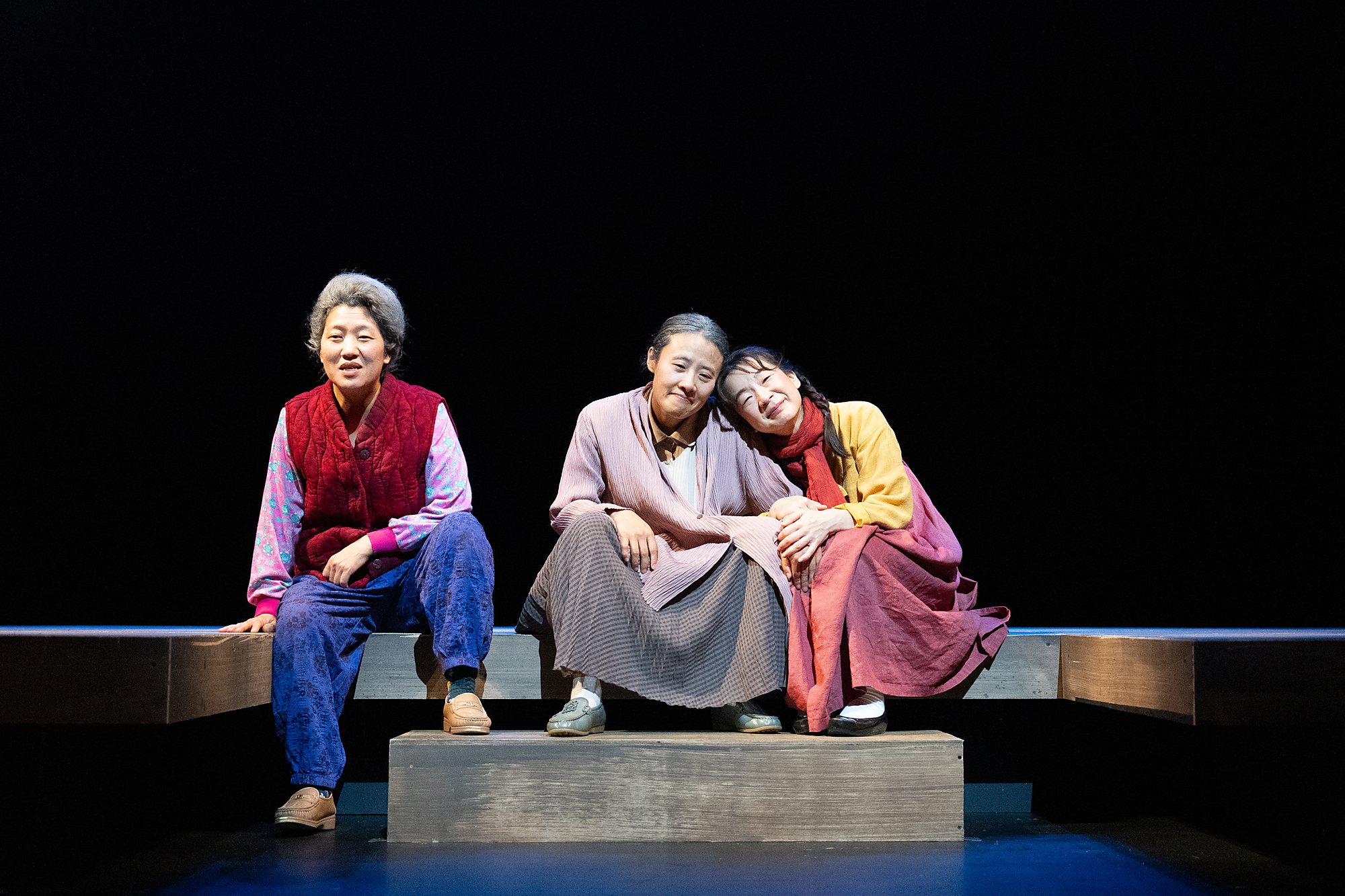
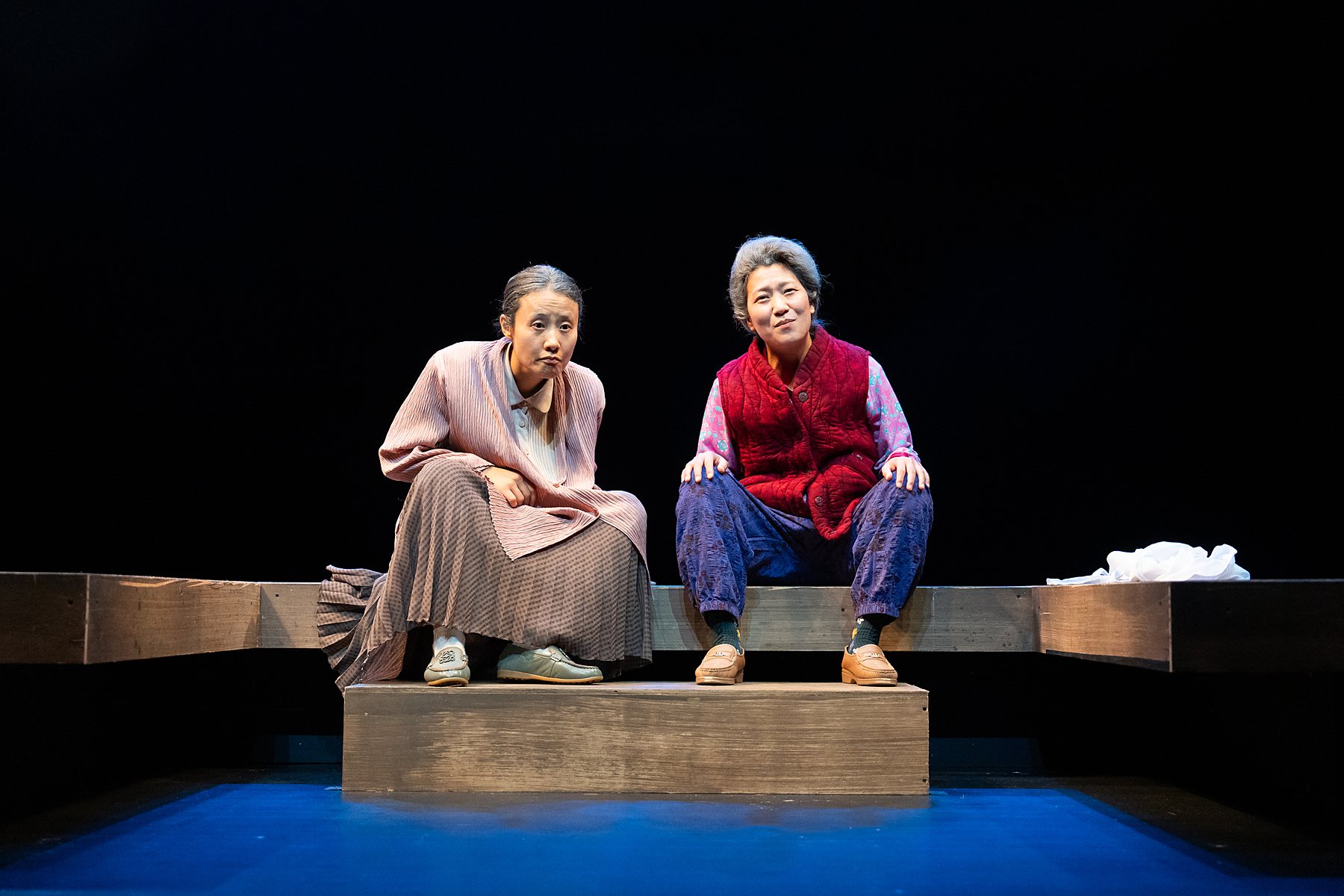
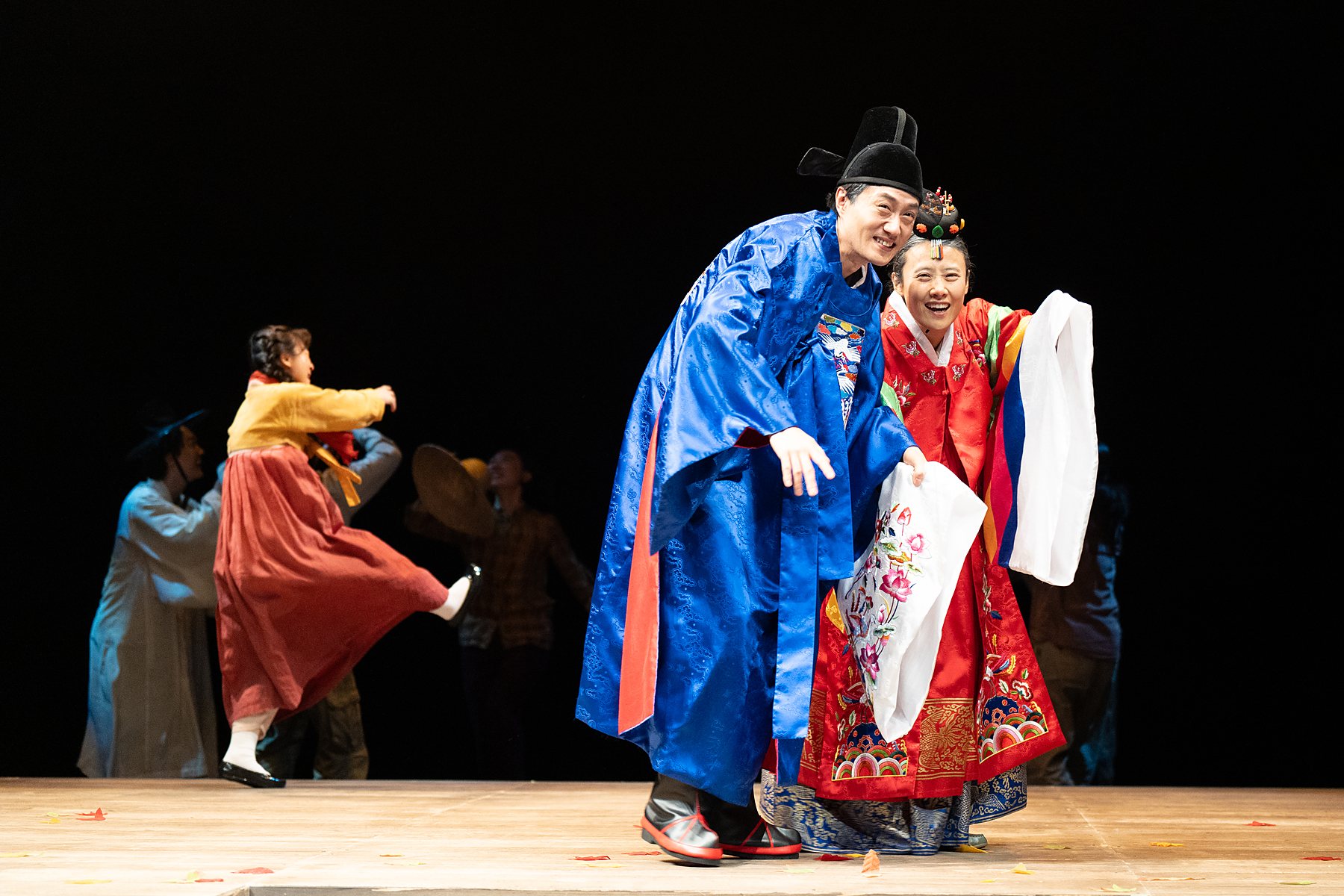
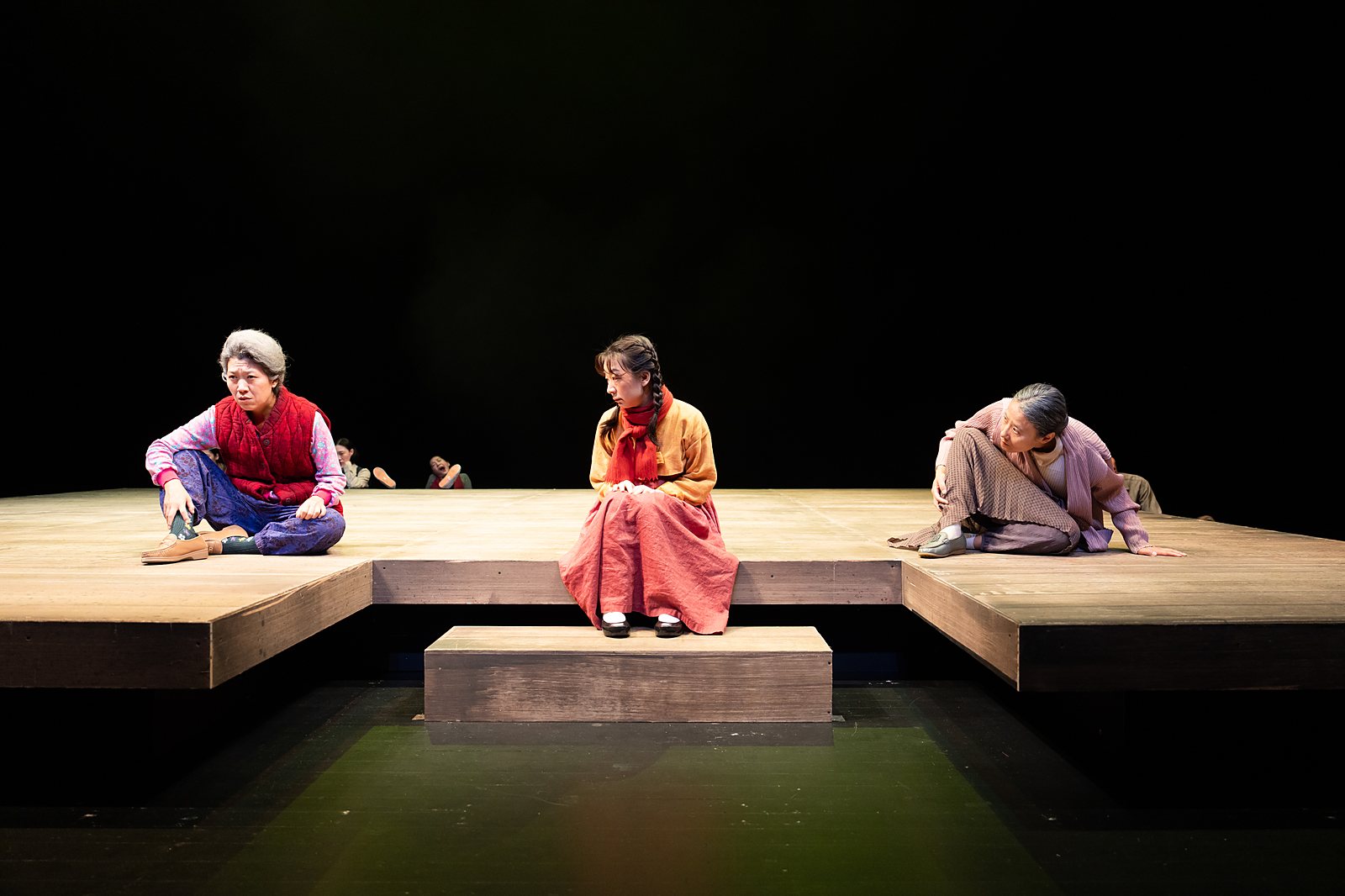
The day before Ipbun renews her wedding vows on their sixtieth anniversary, she sits on the porch with Sunhee — her childhood friend and the owner of the restaurant. Then, before them, another old friend appears: the Girl.
But the Girl does not know why she died, or why she has appeared here again. She only wants to know what has become of her now-aged friends.
Facing her, Sunhee and Ipbun begin, one by one, to unearth a story they have kept buried inside for decades.
Decades have passed since the war ended.
But is the memory of that day truly over?
And back then,
what did we see—
and what could we never say?
SCENE
At the center of the stage,
a great wooden platform.
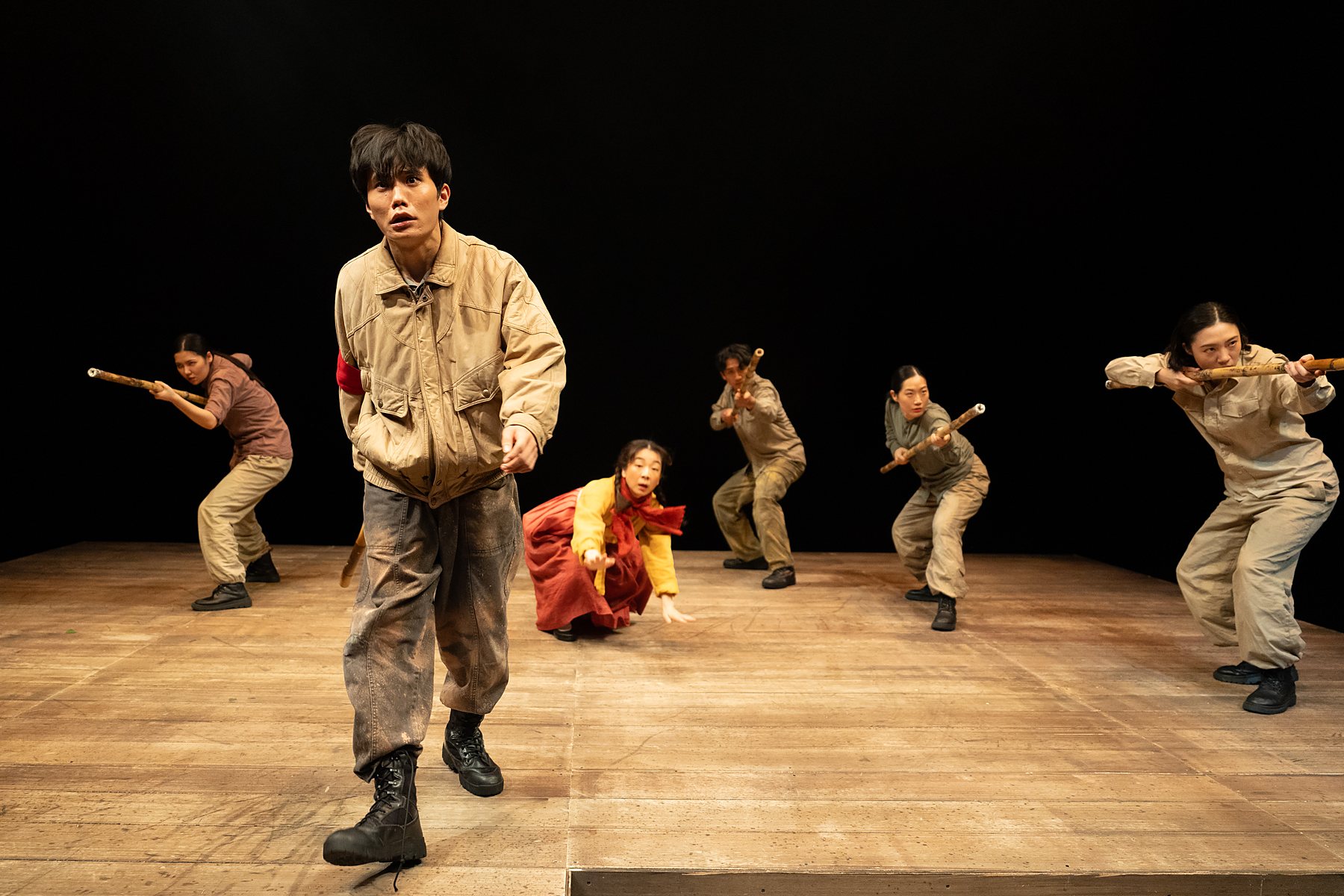
It becomes, at times, the porch of the restaurant — and at other times, a place where the memory of war still lingers.
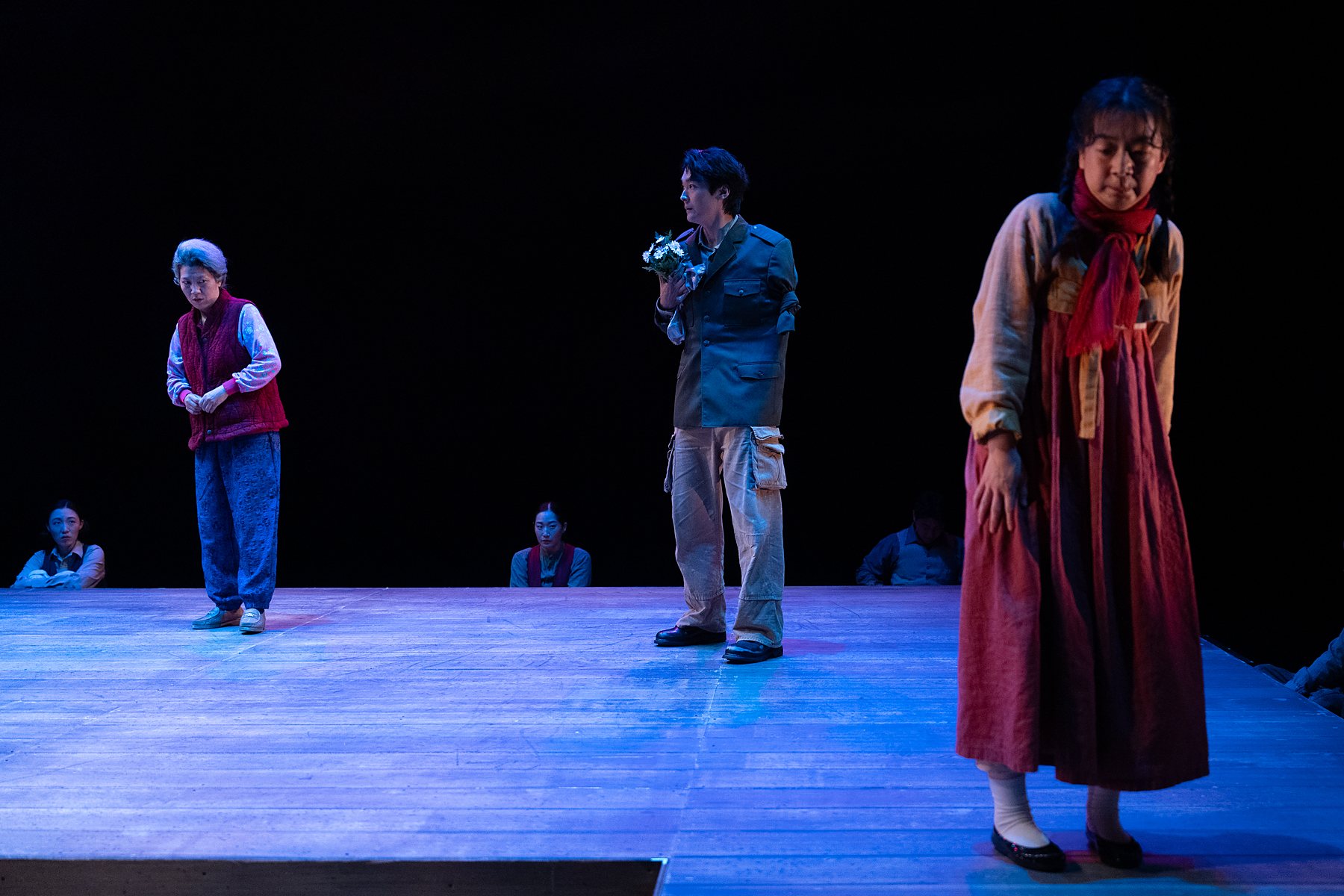
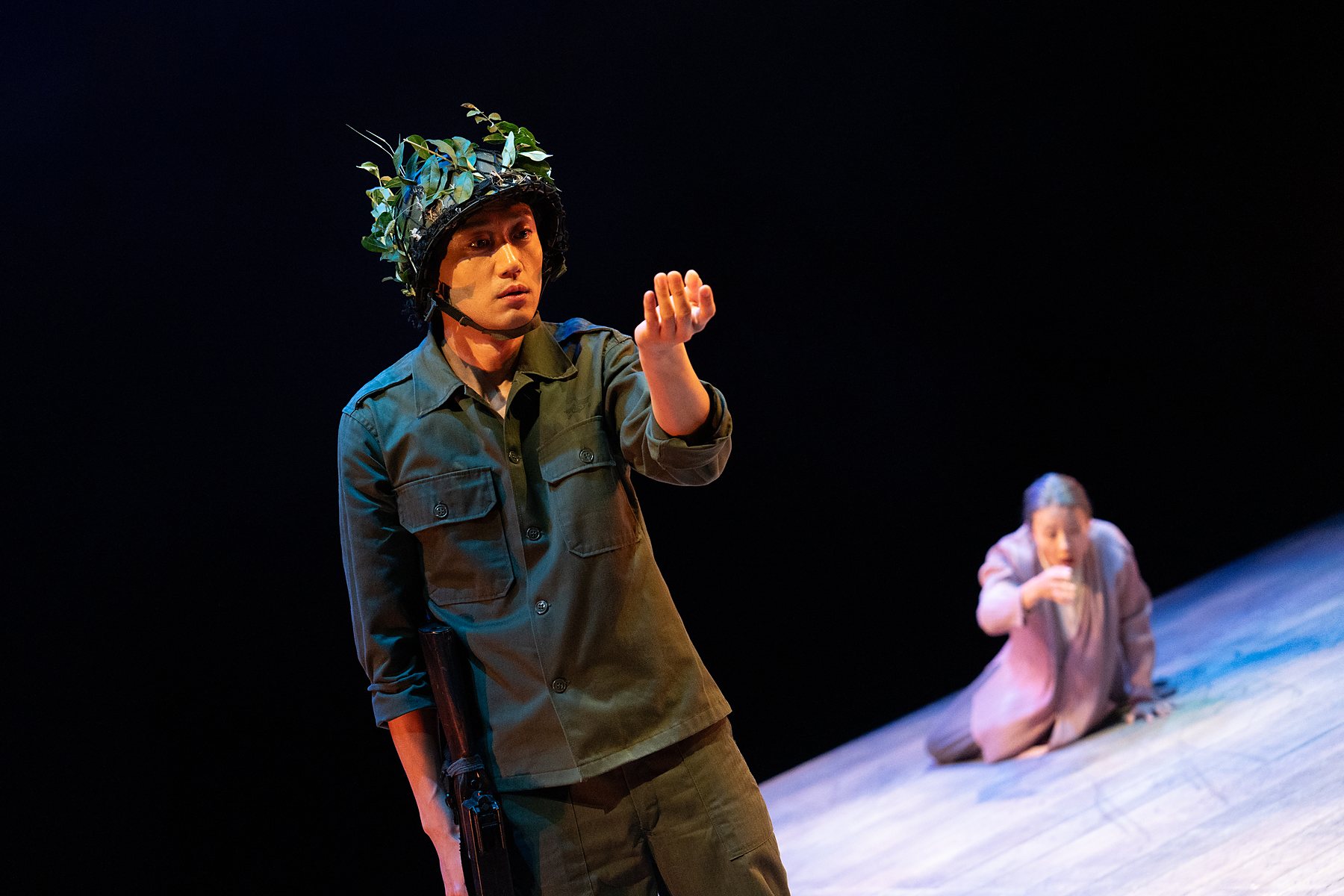
The line between present and past is never clear. Yesterday’s story becomes today’s scene, and the memory of a girl long dead is revived through the bodies of the living.
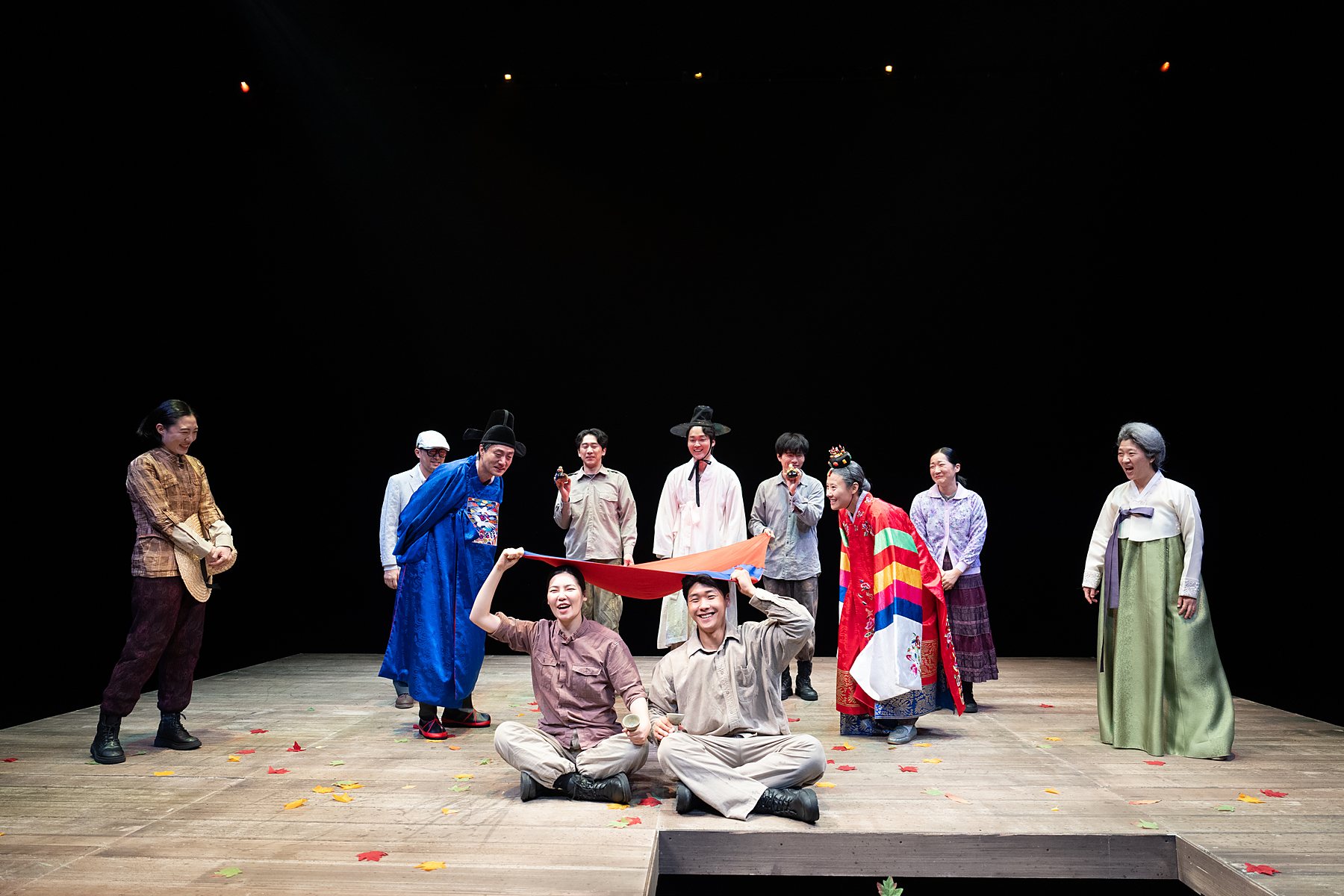
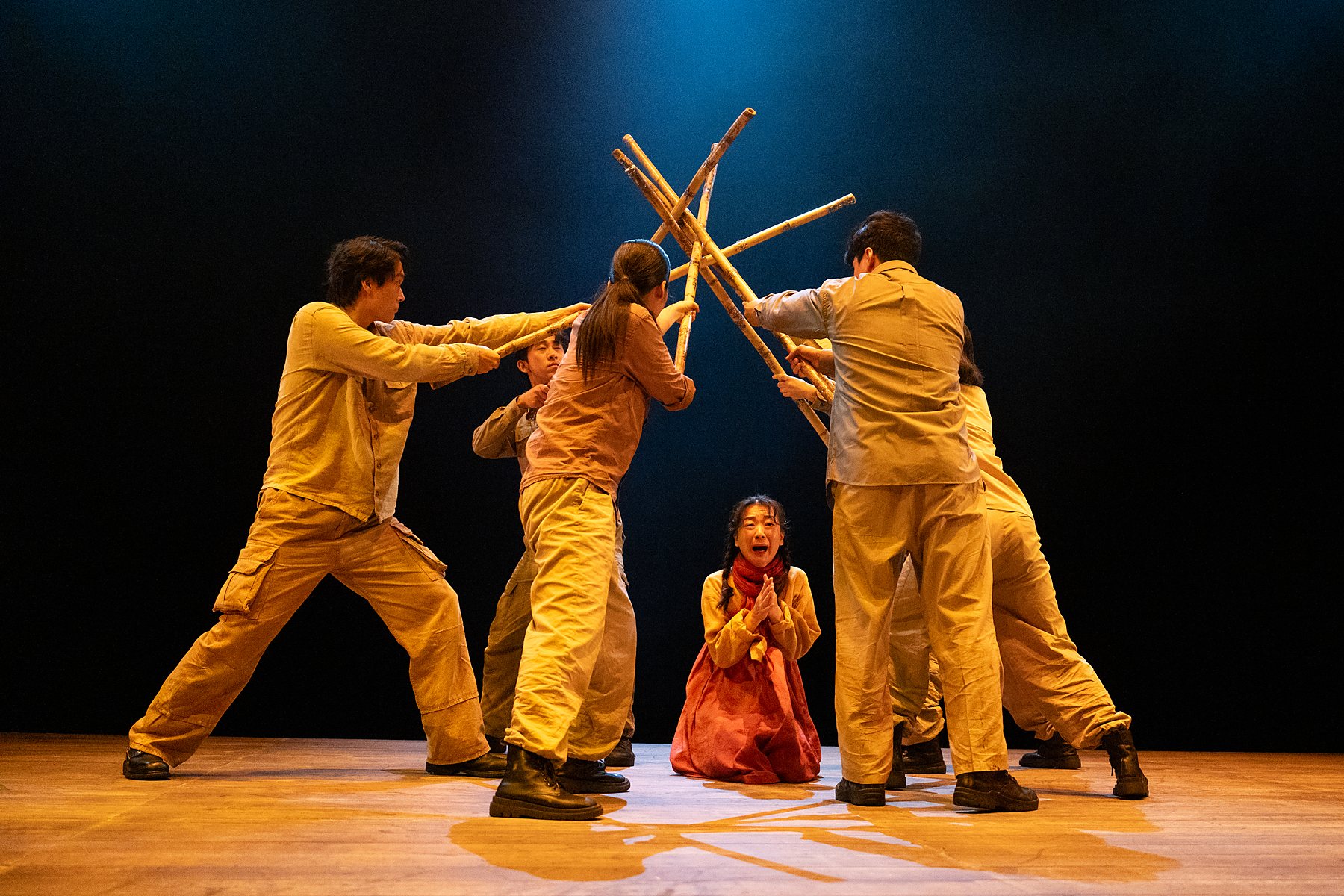
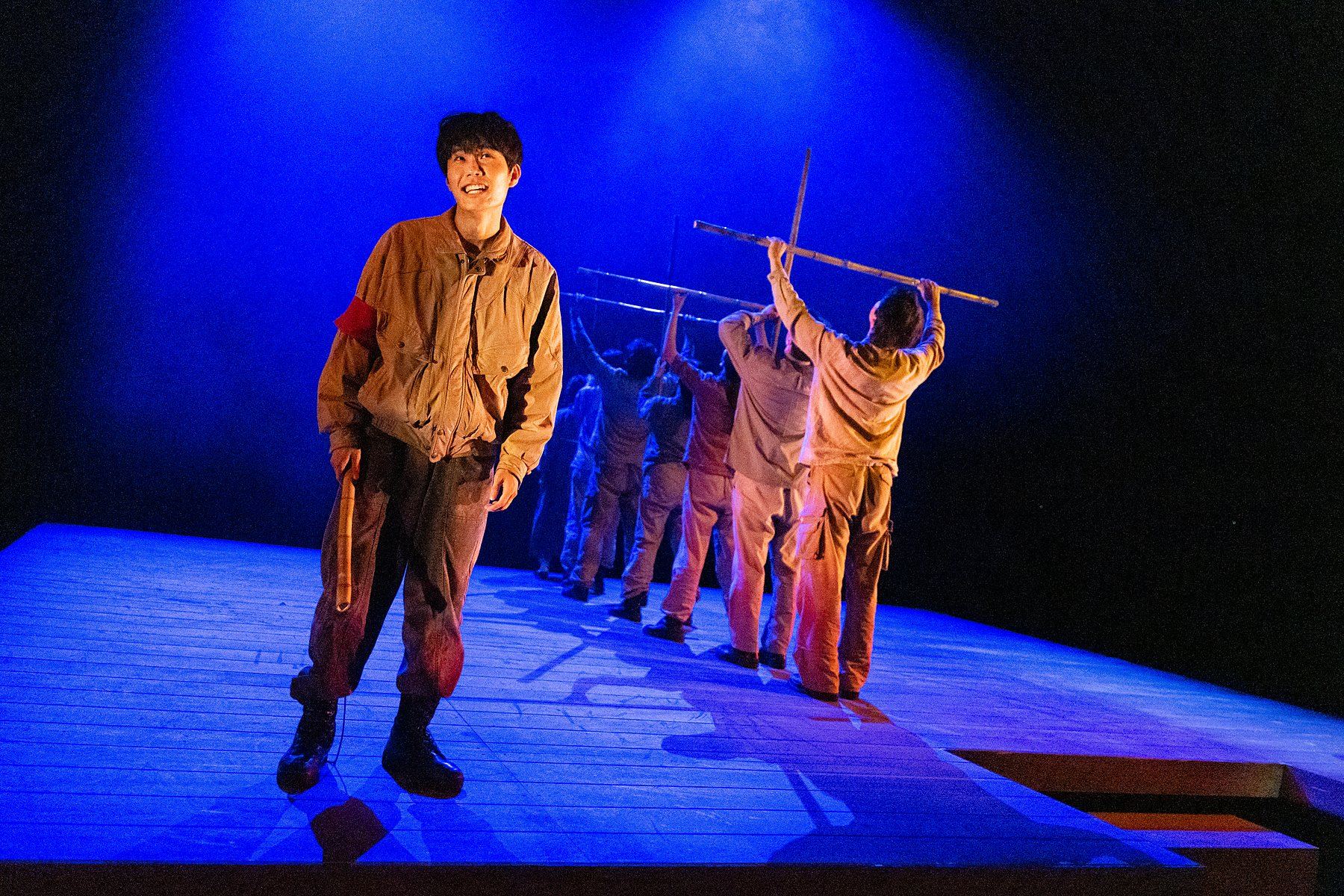
The movement of the actors and the chorus shift the time of the space, and in an instant, one person’s memory becomes everyone’s.
SCENES
01 / 11
02 / 11
03 / 11
04 / 11
05 / 11
06 / 11
07 / 11
08 / 11
09 / 11
10 / 11
11 / 11
BACKGROUND
The Korean War, which began on June 25, 1950, ended in an armistice on July 27, 1953.
But the war was not fought on the front lines alone. Violence spread even to the villages of Jeolla Province, considered the rear, and countless civilians lost their lives in what came to be called the ‘massacre of innocent civilians.’
Those who survived could not easily speak of what they remembered. Who died, who lived, what was seen, and what could never be said — all of it was left buried in silence for decades.
Baesogoji; A Pond in the Memory begins with the oral testimonies of survivors of the Korean War civilian massacres in Imsil, Jeolla Province.
Rather than reenacting the vast history of war, the work looks at the memories and relationships of the women who lived through it. The fear and guilt left within one woman’s testimony, the silence of a survivor, and a question that never fades are called back to life through fictional characters and the language of the stage.
Why Baesogoji? Baesogoji is the old name of a village in Imsil, Jeolla Province. Rather than the site of one specific event, it stands here for the many nameless villages that lived through the war. This is where the story begins — of those who survived, and of those who, precisely because they survived, had to stay silent for even longer.
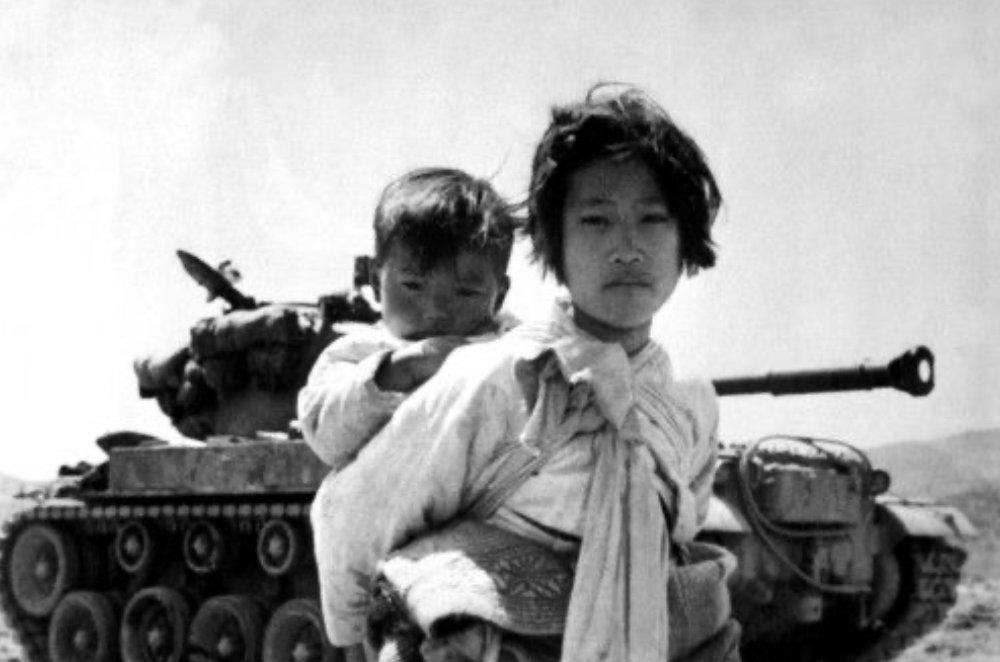
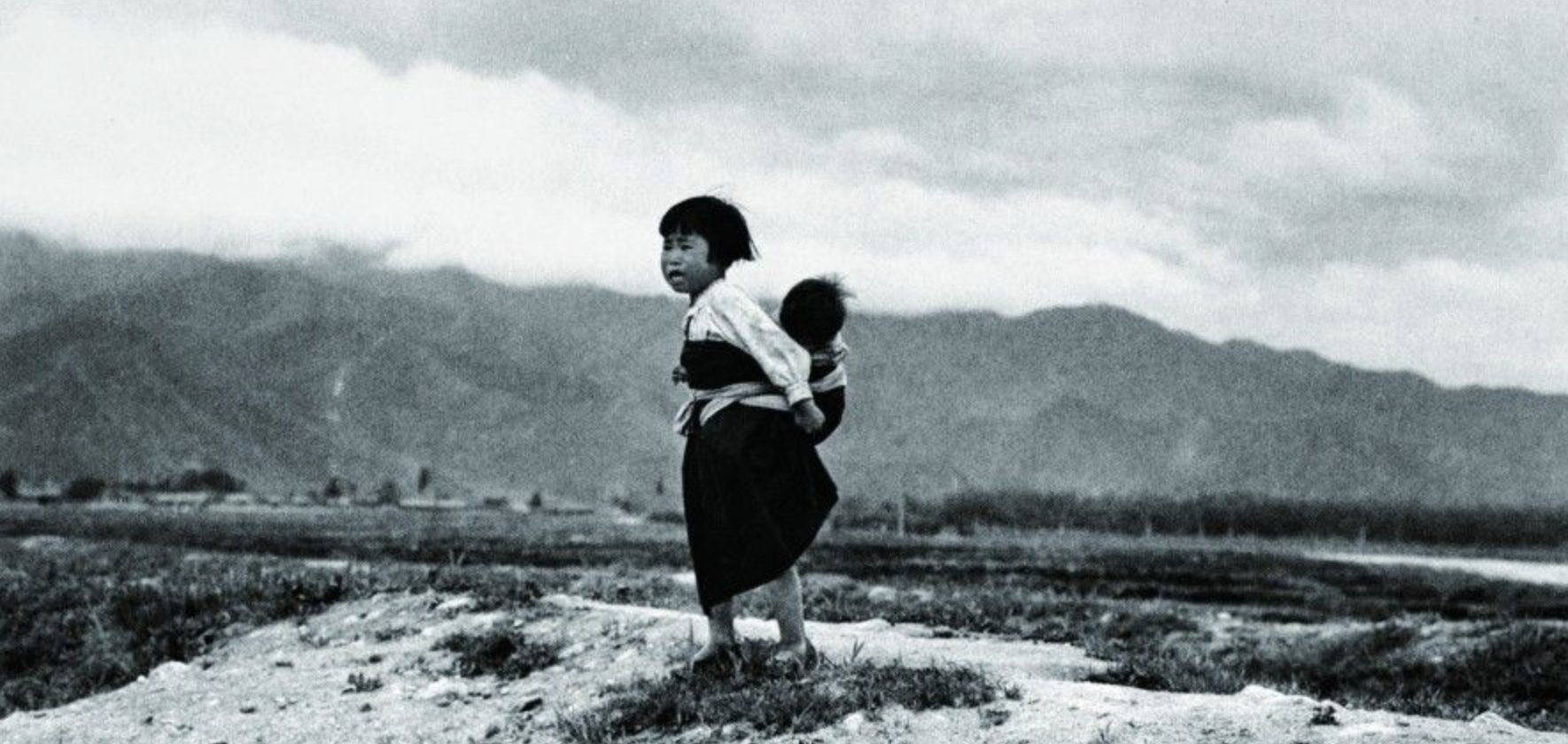
“How should we remember the lives that never ended, even after the war did?”
APPROACH
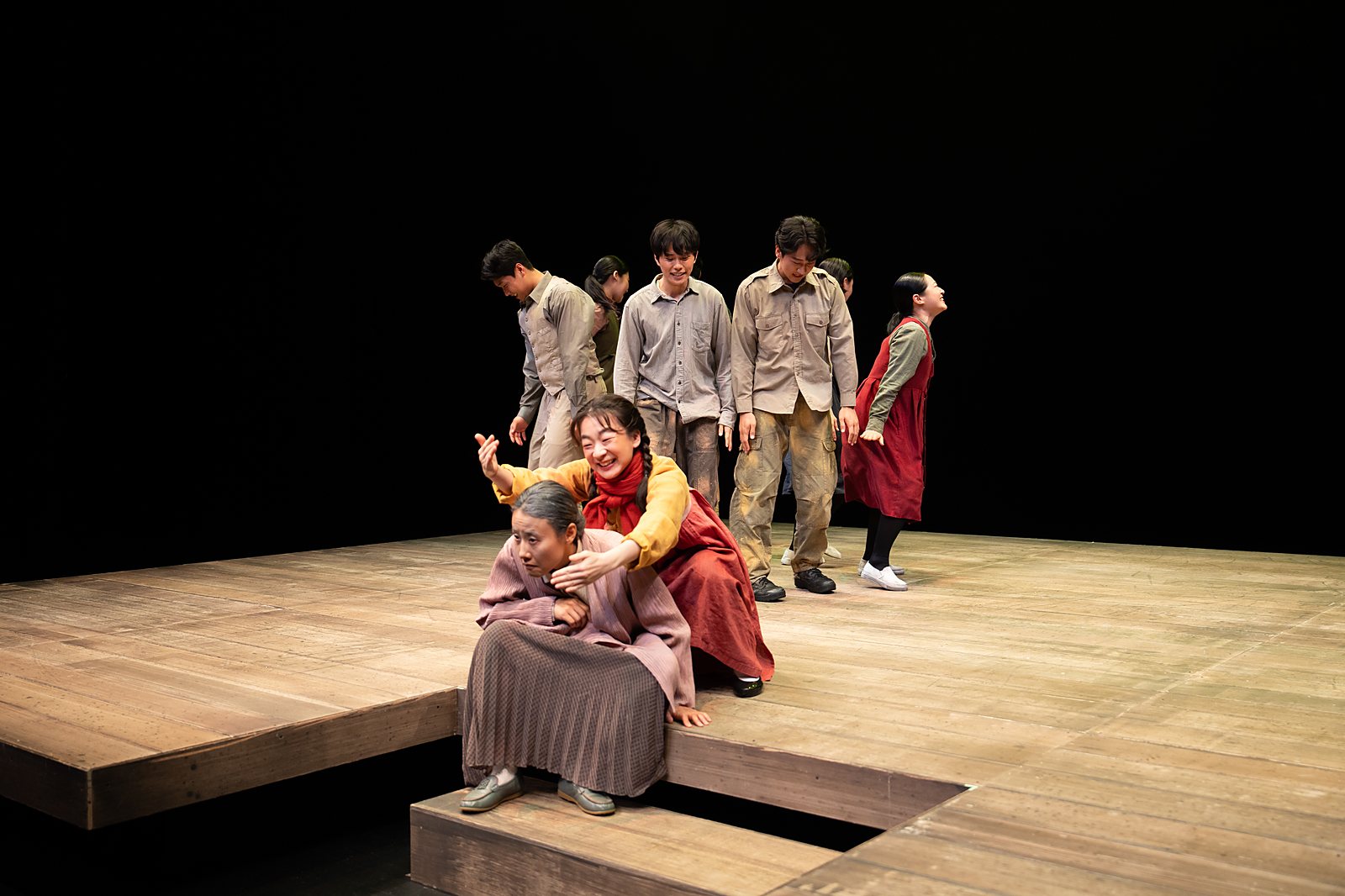
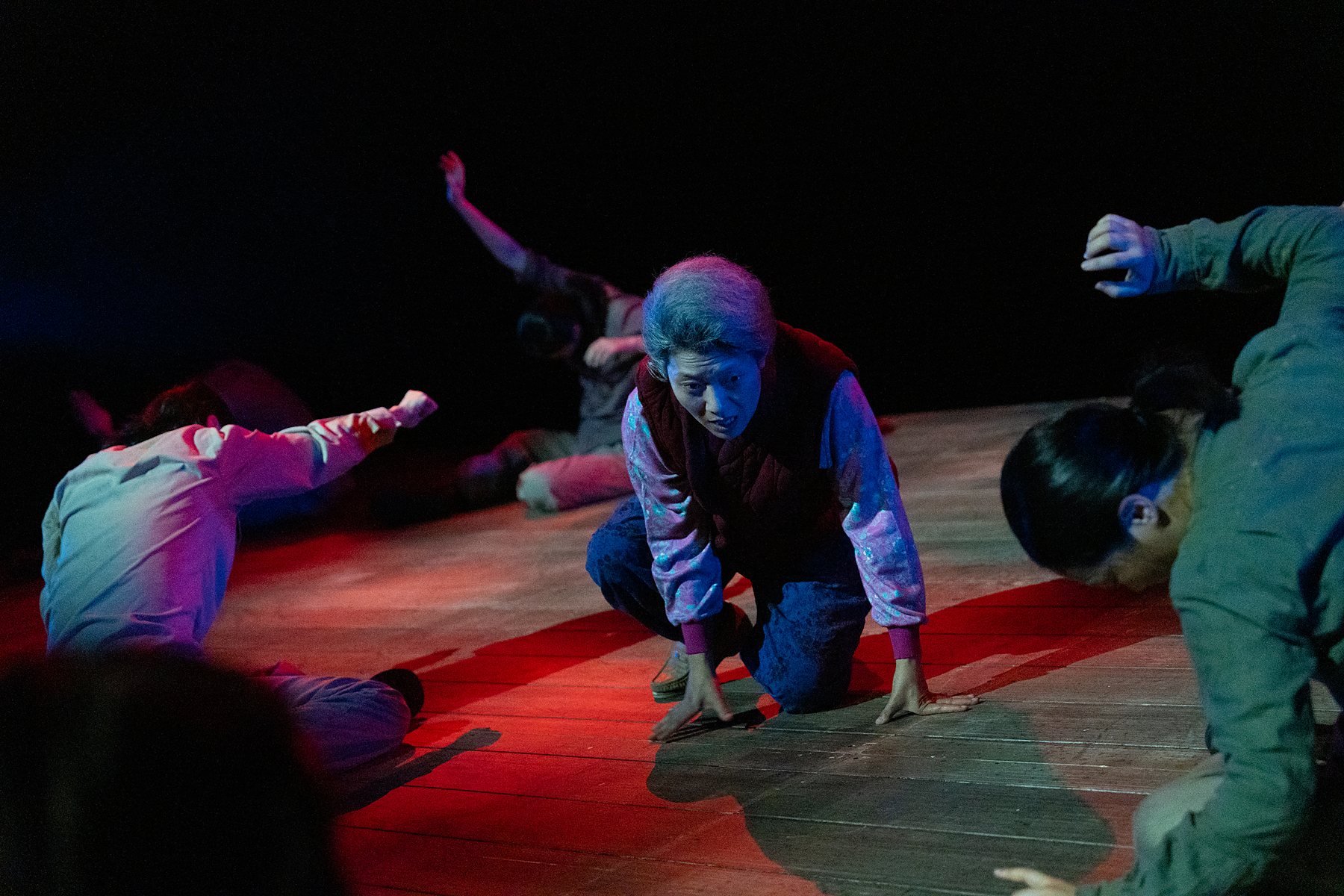
The chorus does not represent one character or a single group. At times they are those who died in the war; at times, victims who lived through that era; and in certain moments, witnesses looking on. They become the objects that shape the landscape of the time, or a wind that passes silently through the space.
Moving between the living and the dead, memory and reality, people and objects, the chorus dissolves the border between past and present — expanding one woman’s memory across the entire stage.
The great wooden platform at the center of the stage is both the porch of the restaurant and a place where memory resides. Watching from all four sides, the audience comes close to the lives and memories of the characters.
An ordinary, everyday space becomes, in an instant, the site of war, as the past seeps into the conversations of the present. Different times overlap within a single space, and the audience is not left watching a character’s memory from a distance — they are placed at the very center of it.
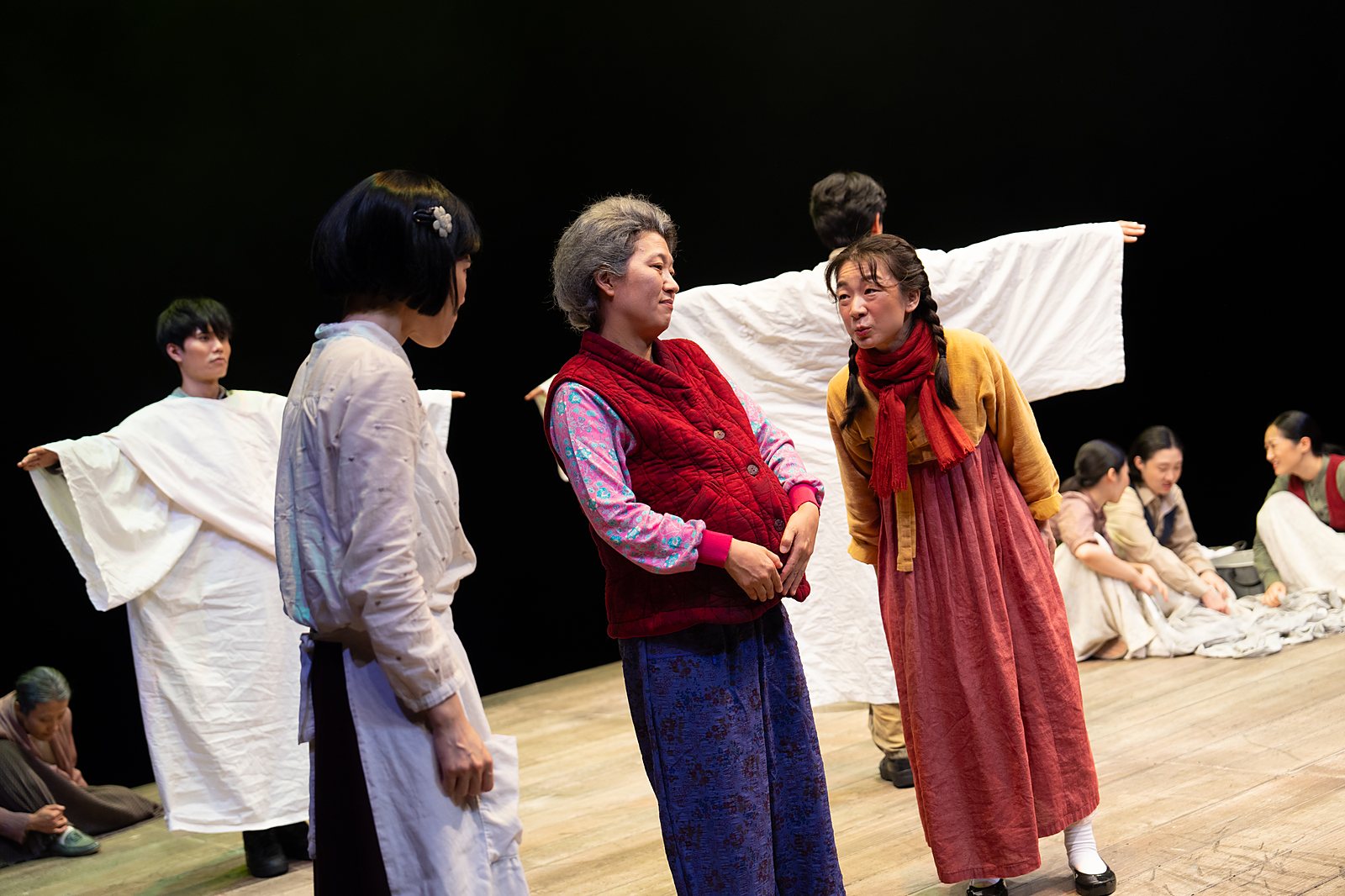
Baesogoji; A Pond in the Memory does not stop at explaining the history of war or simply reenacting events. The actors’ words and bodies, songs and sounds, objects and movements each reveal the traces of memory in their own way.
The fear and silence that are hard to put into words, and the complicated emotions of survivors, are conveyed to the audience through the images of each scene and the actors’ movement. Memory does not remain in words alone — it remains in the body, and in space.
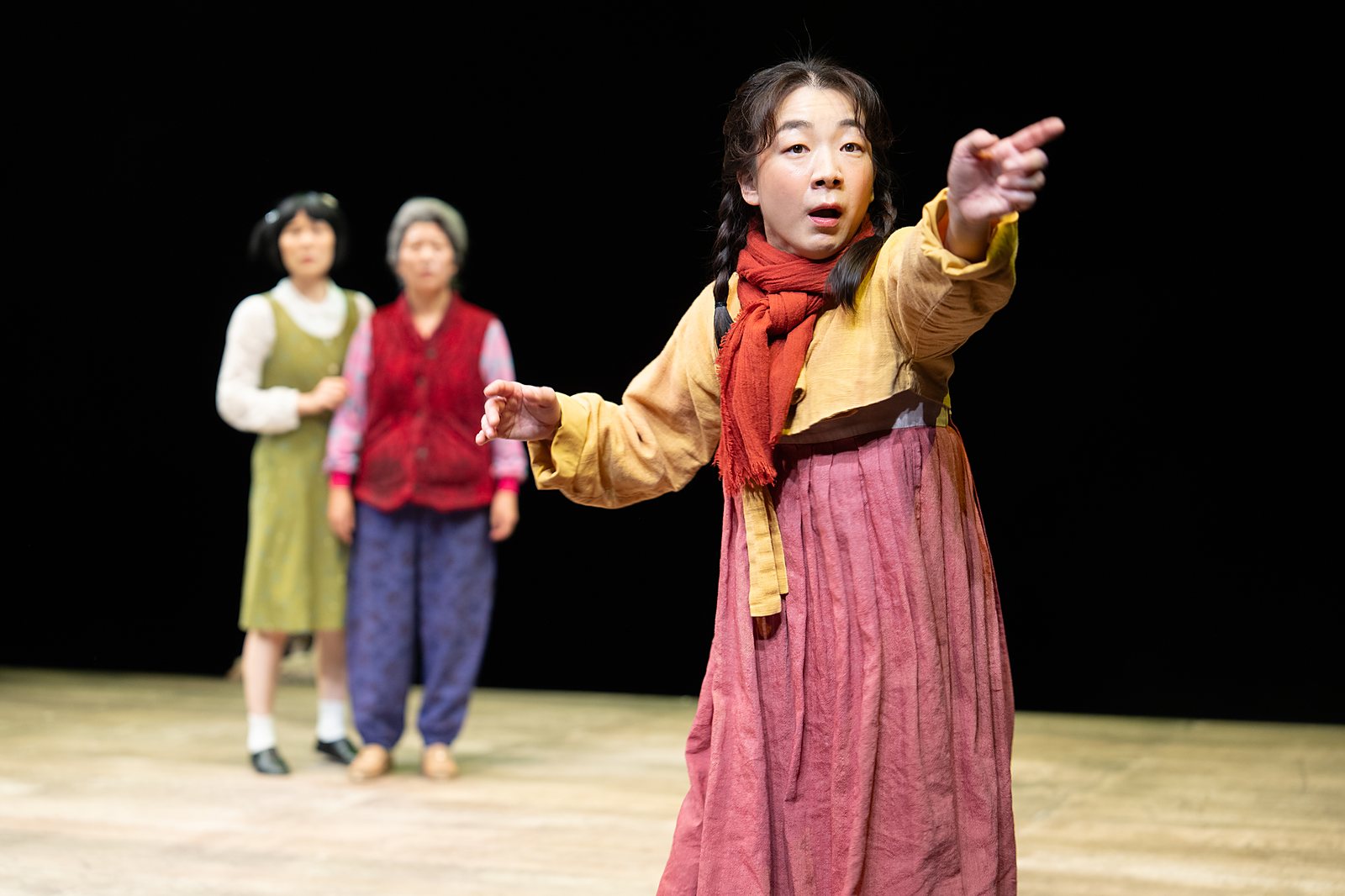
The work does not resolve the truth of war into a single answer. Within war, people are caught in relationships too complex to be defined by a single name — victim and perpetrator, witness and bystander.
Can we truly say the war has ended for those who survived that day? Even after the curtain falls, the question remains in the memory of the audience.
Everyone carries,
somewhere inside, a war not yet ended.
CHARACTERS
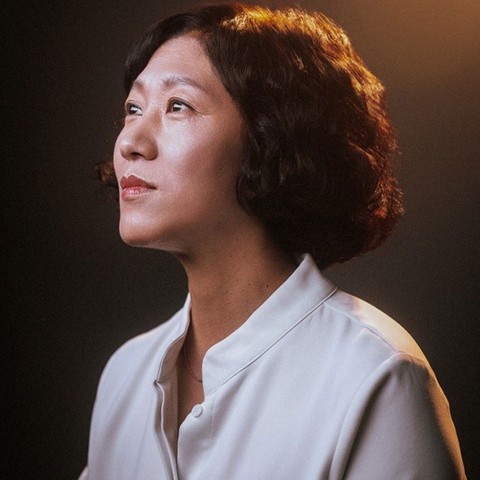
HWANG Sewon
as Sunhee
Stew Restaurant Owner
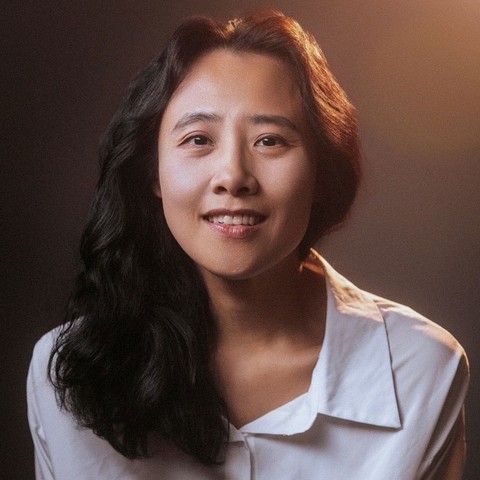
IM Jeongeun
as Ipbun
Sunhee’s Friend
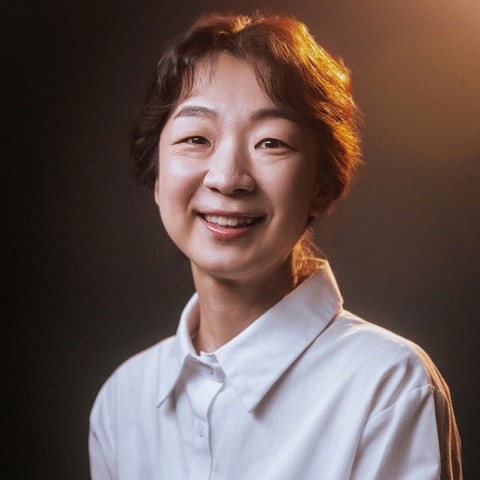
SEO Miyoung
as the Girl
Childhood Friend
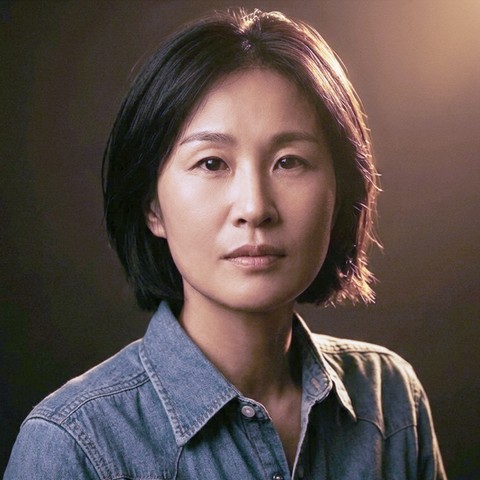
LEE Yeji
as Makdong
Sunhee’s Sister-in-law
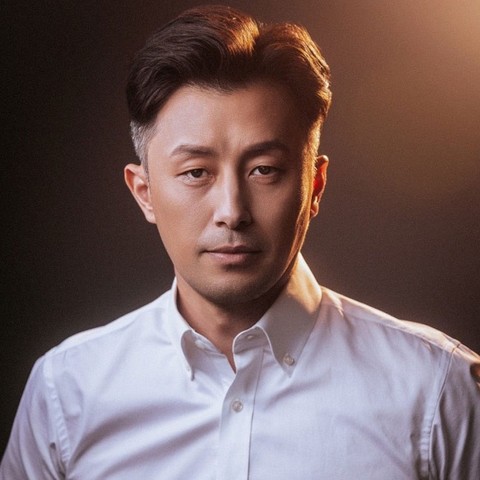
KIM Seunghwan
as Mr. Park
Sunhee’s Husband
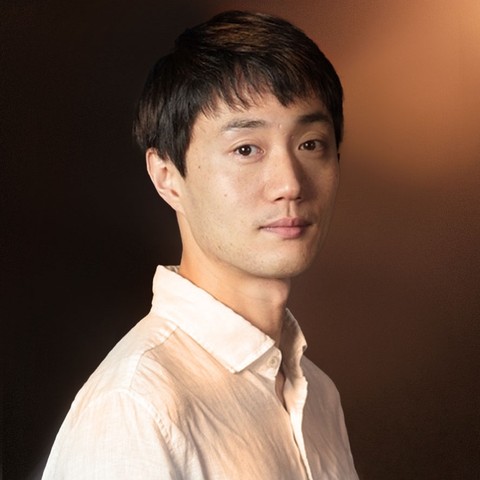
YOON Ilsik
as Mr. Gong
Ipbun’s Husband
TOURING
Universality
Though it begins with the specific history of the Korean War, the questions Baesogoji; A Pond in the Memory raises are not confined to one era or region. Loss that continues long after war ends, memories that could never be spoken, silence left within families and communities — these have repeated throughout histories around the world. Drawing on the oral testimony of one region, the work expands, through the voices of women who lived through war, into universal questions of memory, violence, survival, and silence.
Theatrical Language
Beyond the actors’ words, the movement of the chorus, song, live sound, objects, and space together build layers of memory. In particular, the form in which the living and the dead coexist within a single space conveys the characters’ relationships and emotions intuitively, regardless of language or cultural background.
Touring Version
Baesogoji; A Pond in the Memory has already reached a wide range of audiences through its runs in Korea and invitations to festivals abroad. Its staging is built around a central wooden platform that narrows the distance between audience and actors, and the actors’ placement and stage configuration can be adjusted to the shape and conditions of the venue. The production can be adapted for proscenium theaters, black box spaces, and other venue conditions through discussion, while keeping intact what is essential to the work — the ensemble, the chorus, and its movement and music.
Selected for PAMS Pitching, Seoul Arts Market
Voices of Memory: A Theater Series on Modern Korean History
12th Babel F.A.S.T. International Performing Arts Festival (Romania)
Official Selection
8th Sharm El-Sheikh International Youth Theatre Festival (Egypt)
Best Production Award
Arts Council Korea
Selected for 2018 Performing Arts Creation Fund, New Work of the Year
Production
Running Time
95 min
Touring Size
14 (10 actors · 4 staff)Actual performances have been staged with a 12-actor ensemble.
Stage Requirements
Standard: W 12m × D 10m × H 5m
Minimum: W 9m × D 8m × H 4m
Main Platform: W 7.38m × D 6mAdaptable depending on venue conditions.
Surtitles
Korean O · English O · Romanian O · Japanese — in preparation
Baesogoji; A Pond in the Memory is one part of Production IDA’s trilogy Voices of Memory: A Theater Series on Modern Korean History, and has appeared on international festival stages in Egypt and Romania.
Through 2026 PAMS Pitching at the Seoul Arts Market, the company is introducing the work to performing-arts professionals from home and abroad, and exploring partnerships for international touring and co-production.
PERFORMANCE HISTORY
2023.03.16
2023 Korea Theatre Festival, Seoul Regional
Baesogoji; A Pond in the Memory
Grand Prize · Best Director · Best Stage Design
Naru Art Center
Seoul
2023.06.22
41st Korea Theatre Festival, Jeju
Baesogoji; A Pond in the Memory
Grand Prize · Best Director · Best Acting Award · Acting Award
BeIN; Theater
Jeju
2023.08.17
23rd Pohang International Sea Theatre Festival · Opening Production
Baesogoji; A Pond in the Memory
Hyoja Art Hall
Pohang
2023.09.07–09.17
Regular Run
Baesogoji; A Pond in the Memory
CKL Stage
Seoul
2024.7–9
Regional Tour · 6 Cities
Baesogoji; A Pond in the Memory
Jeju · Nonsan · Mokpo · Gwangyang · Busan · Suncheon
Nationwide
2024.8.31–09.08
National Theater Company of Korea · Invited Production
Baesogoji; A Pond in the Memory
Myeongdong Theater
Seoul
2024.10.25–10.26
Invited Production
Baesogoji; A Pond in the Memory
Namhansanseong Art Hall
Gwangju, Gyeonggi
2025.09.19
Regional Tour
Baesogoji; A Pond in the Memory
Pyeongtaek Nambu Culture & Arts Center
Pyeongtaek
INTERNATIONAL
2023.11.29
Best Production Award · Acting Award
8th Sharm El-Sheikh International Youth Theatre Festival
Official Competition
Egypt
2024.06.14
Official Selection
12th Babel F.A.S.T. International Performing Arts Festival
Târgovište
Romania
For a more detailed performance history, please visit the CALENDAR page.
CREATIVE TEAM
PlaywrightJinju
DirectorKIM Heeyoung
SetPARK Sangbong
LightingKIM Seonggu
MusicJUNG Bohyung
CLOSING
"I don’t need to recall the war —
my whole life is still at war, even now…"
— Svetlana Alexievich,
The Unwomanly Face of War
WHAT REMAINS
The performance ends,
but the story remains.
Photos, video, and records of Baesogoji; A Pond in the Memory
are kept in Production IDA’s ARCHIVE.
CONTACT
Let’s talk about performance, creation, and collaboration.
PRODUCTION IDA
PRODUCTION
Baesogoji; A Pond in the Memory
Running Time
95 min
Touring Size
14 (10 actors · 4 staff)Actual performances have been staged with a 12-actor ensemble.
Stage Requirements
Standard: W 12m × D 10m × H 5m
Minimum: W 9m × D 8m × H 4m
Main Platform: W 7.38m × D 6mAdaptable depending on venue conditions.
Surtitles
Korean O · English O · Romanian O · Japanese — in preparation
Baesogoji; A Pond in the Memory is one part of Production IDA’s trilogy Voices of Memory: A Theater Series on Modern Korean History, and has appeared on international festival stages in Egypt and Romania.
Through 2026 PAMS Pitching at the Seoul Arts Market, the company is introducing the work to performing-arts professionals from home and abroad, and exploring partnerships for international touring and co-production.