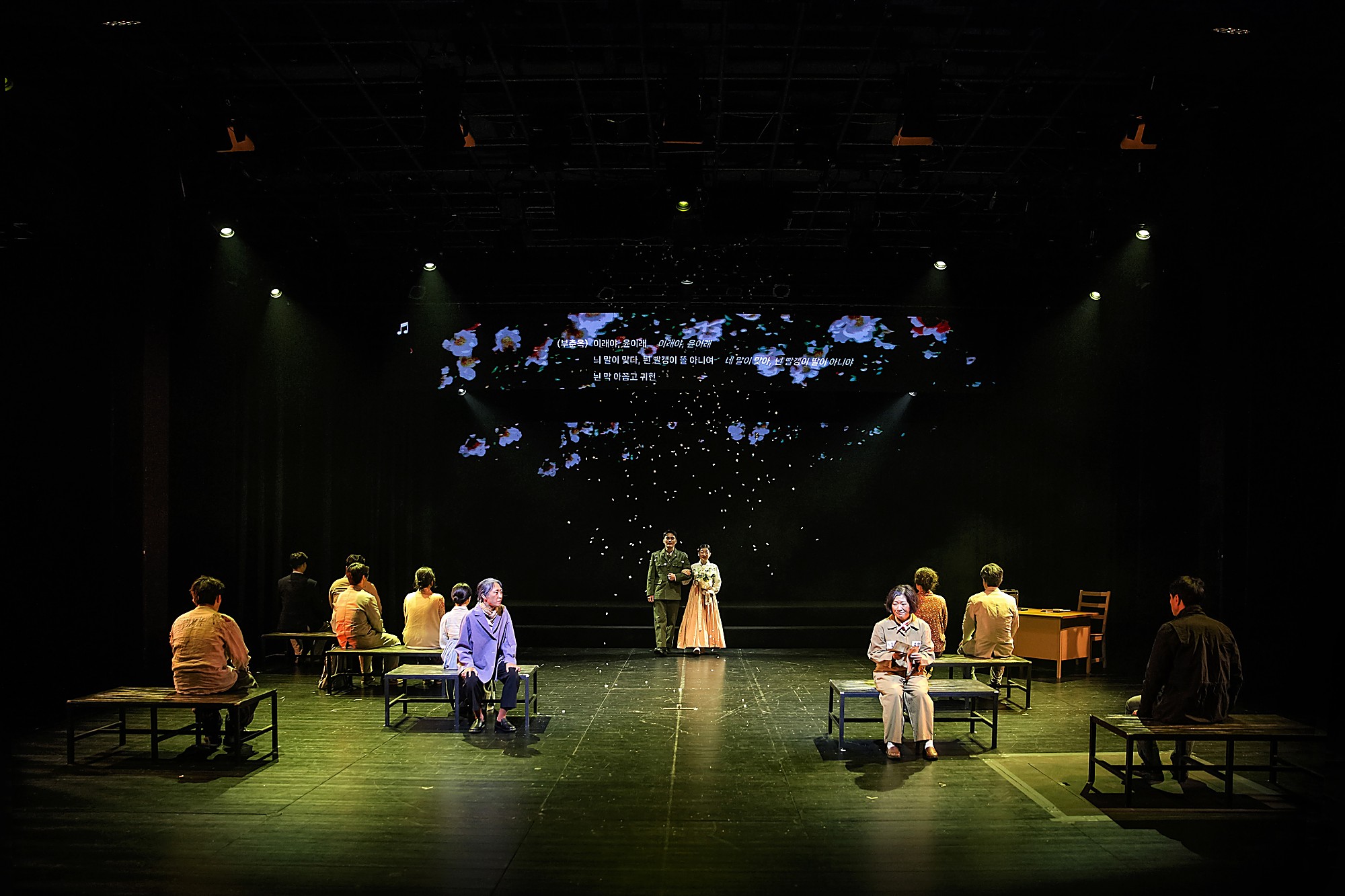
01 / 15
WORK
Jeju, spring 2003.
The trial of a haenyeo found beside a fallen statue.
THE STORY
Jeju, 2003.
Beside a statue
felled by a chainsaw,
a haenyeo is arrested.
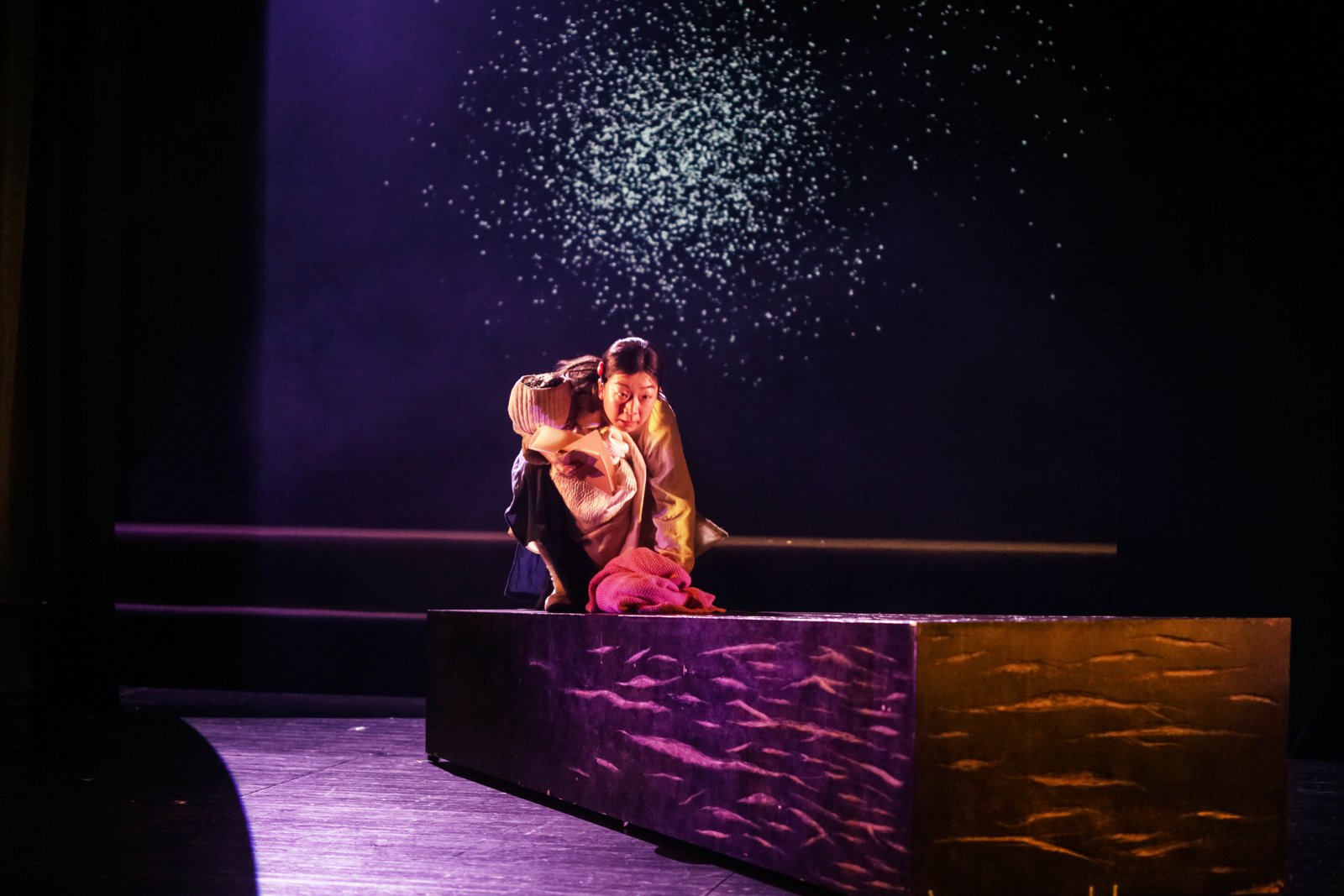
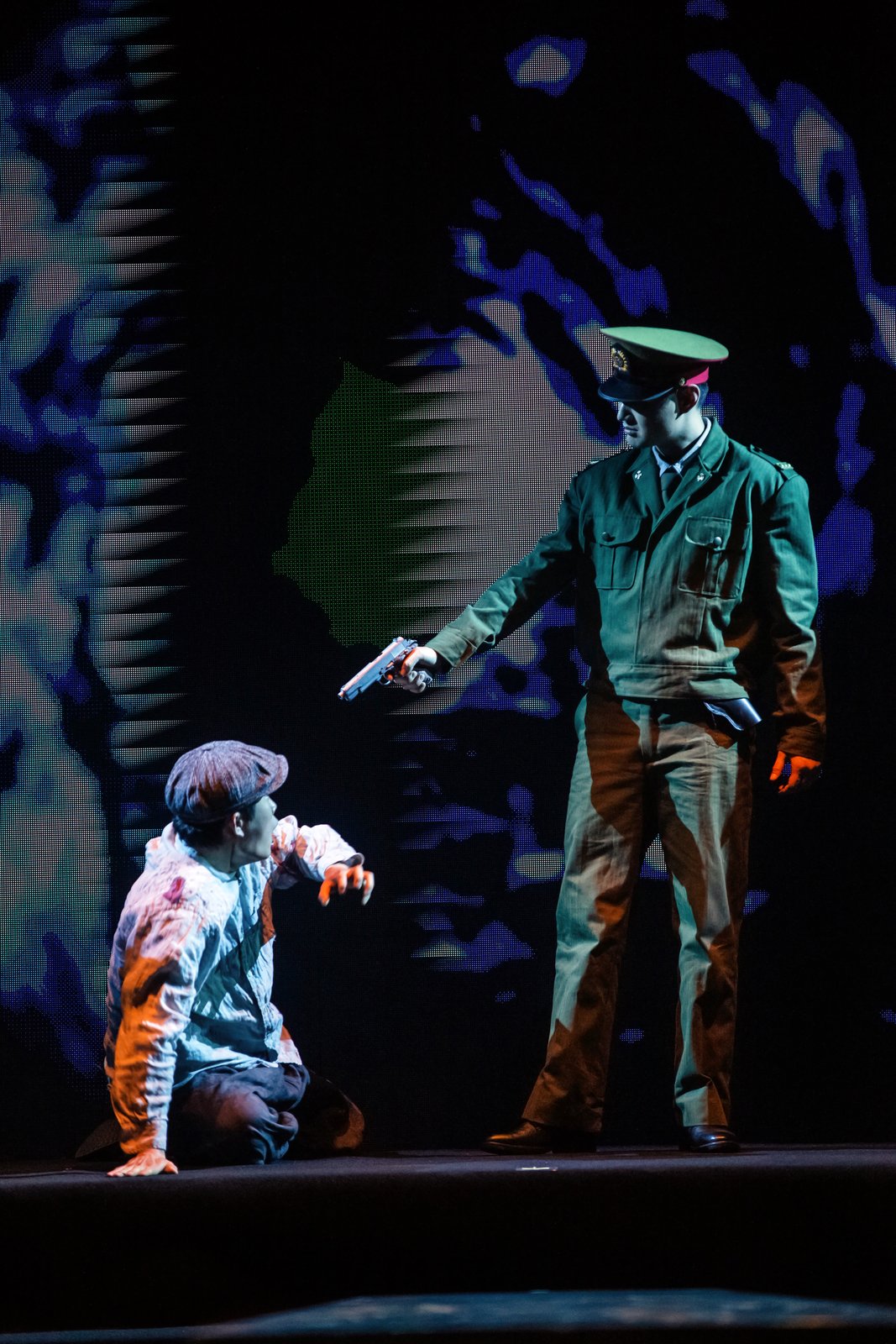
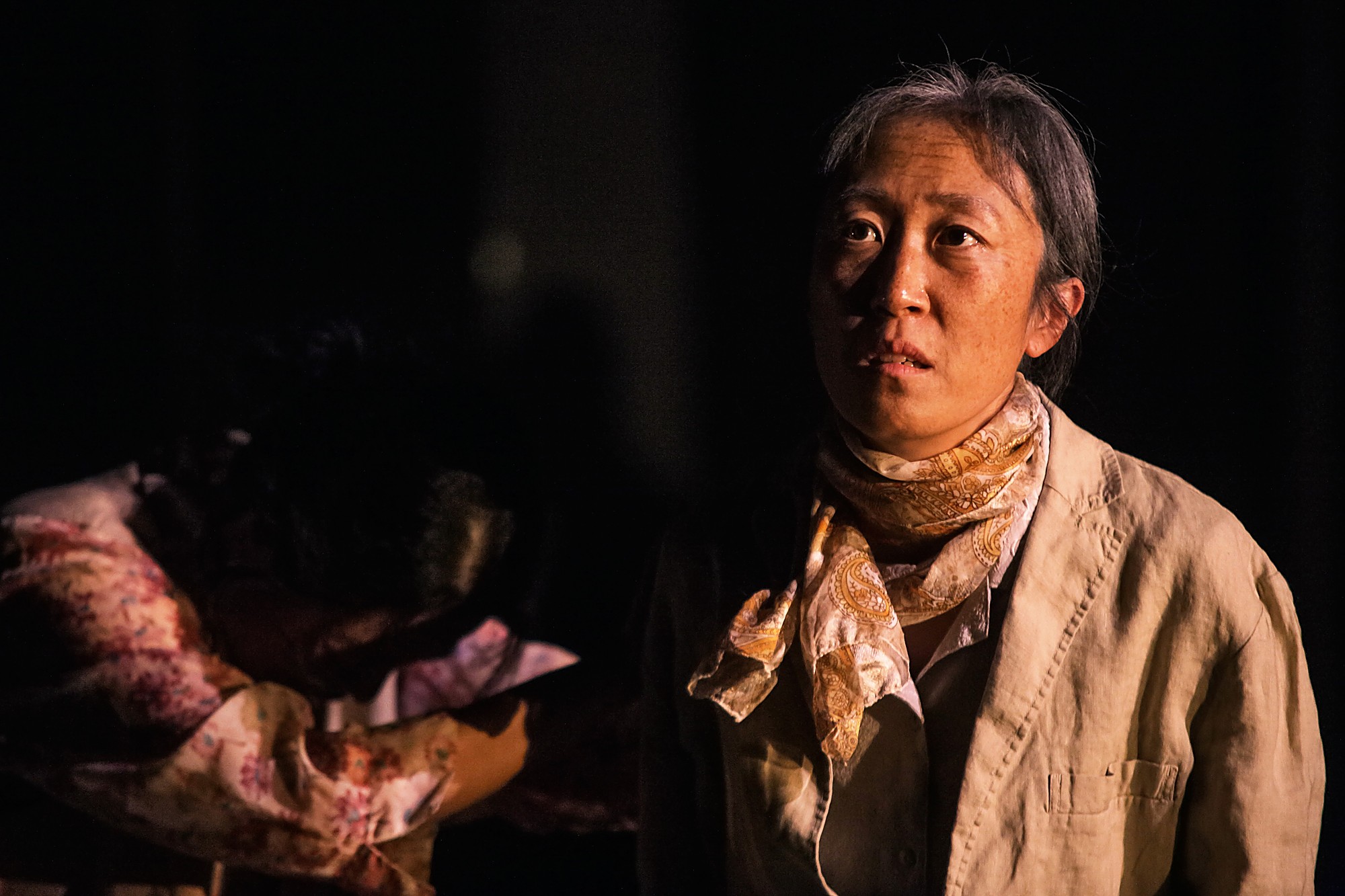
Go Irae, a haenyeo (traditional Jeju woman diver) from the village of Sehwa-ri, cuts down the statue of an officer once hailed as a ‘national hero’ — felling it with a chainsaw. Around the fallen statue, dozens of bitchang, the haenyeo’s traditional diving tools, are found planted in a circle.
The sixty-year-old woman, who lives alone, will not say why. She only hums a single line of a song, low under her breath.
What makes her sing?
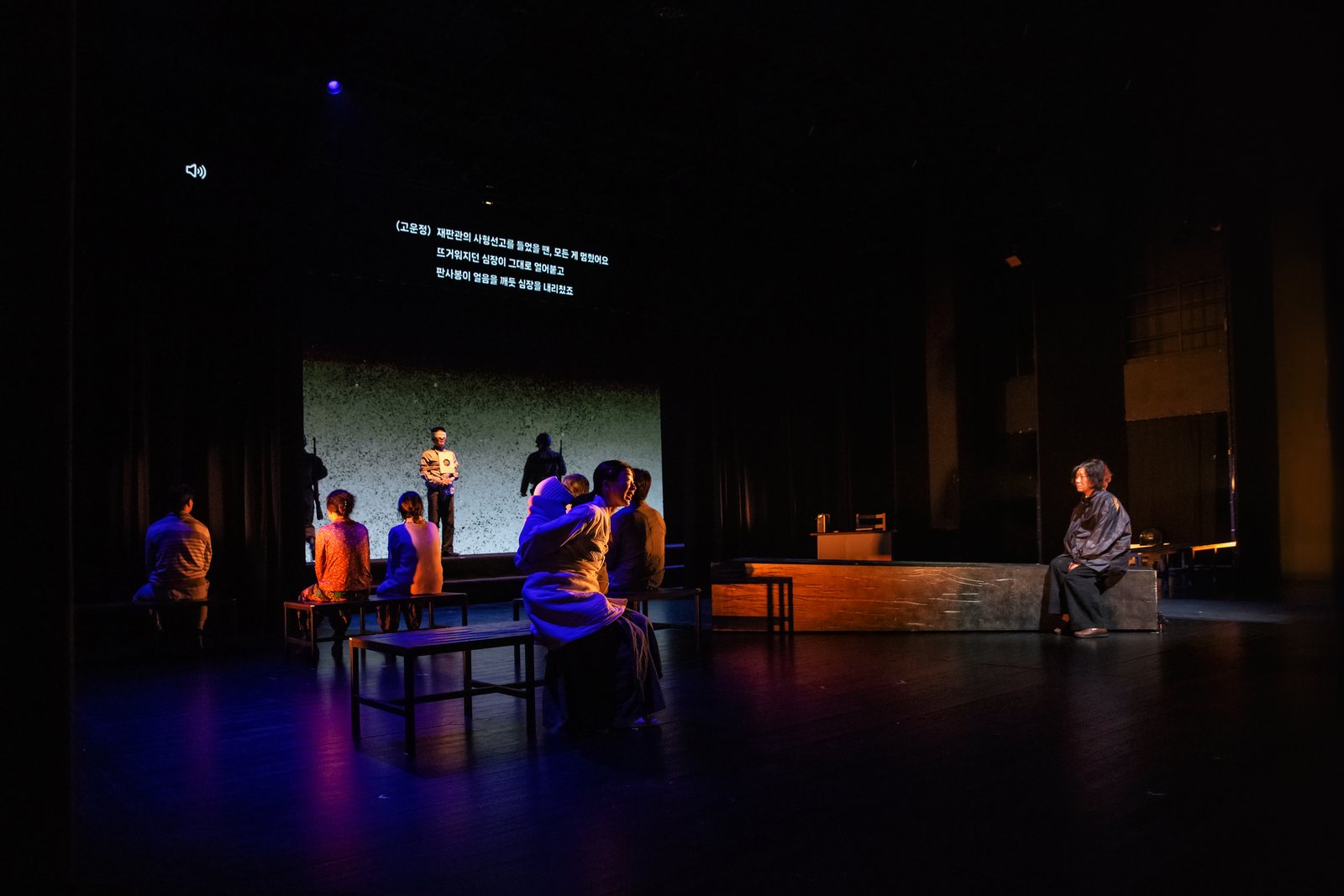
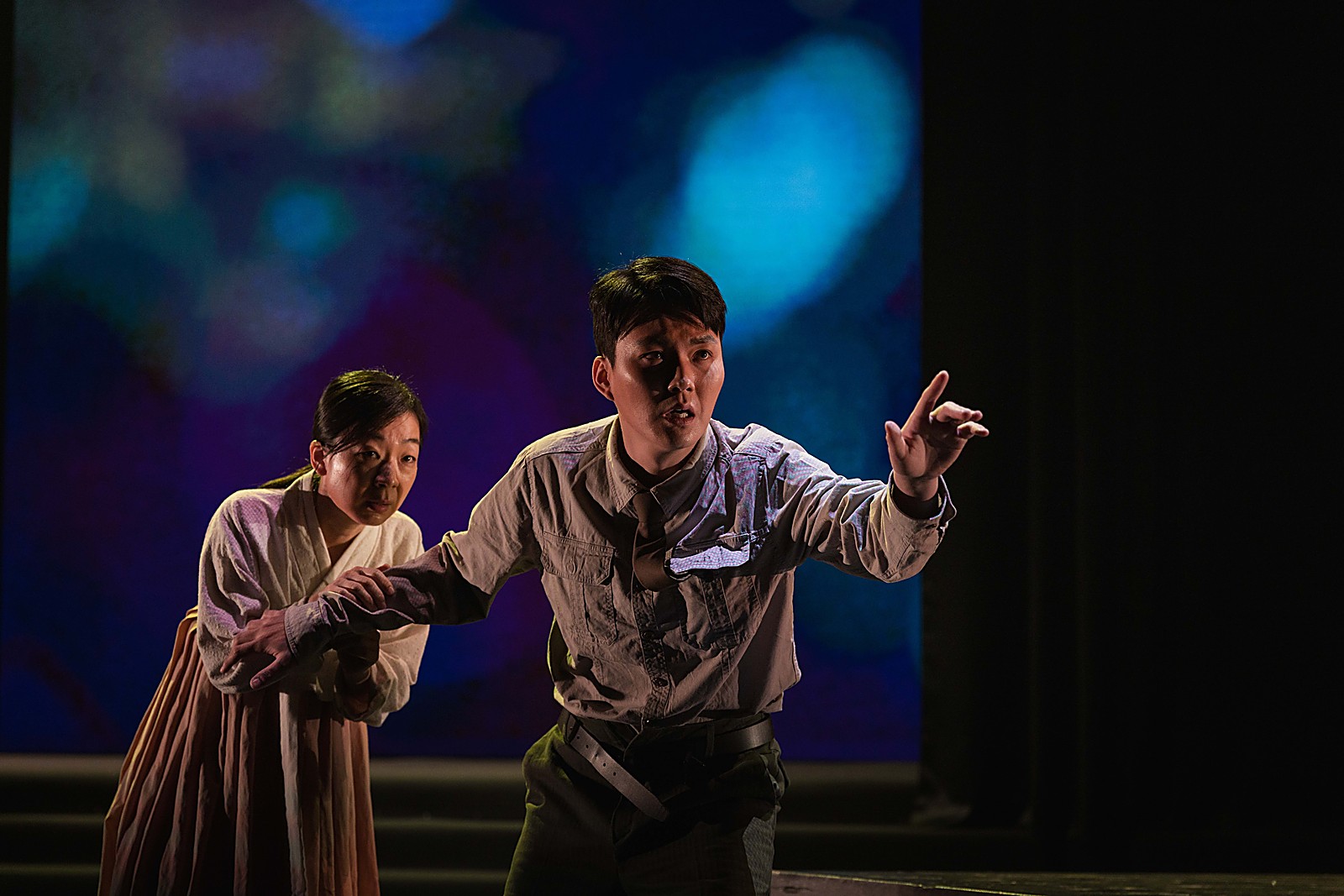
As the investigation continues, one by one, stories long buried in the wounds of the 1948 Jeju April 3 Incident come to light. Confession by confession, a long silence is torn open in the courtroom. And at last, her voice rings out.
SCENES
01 / 15
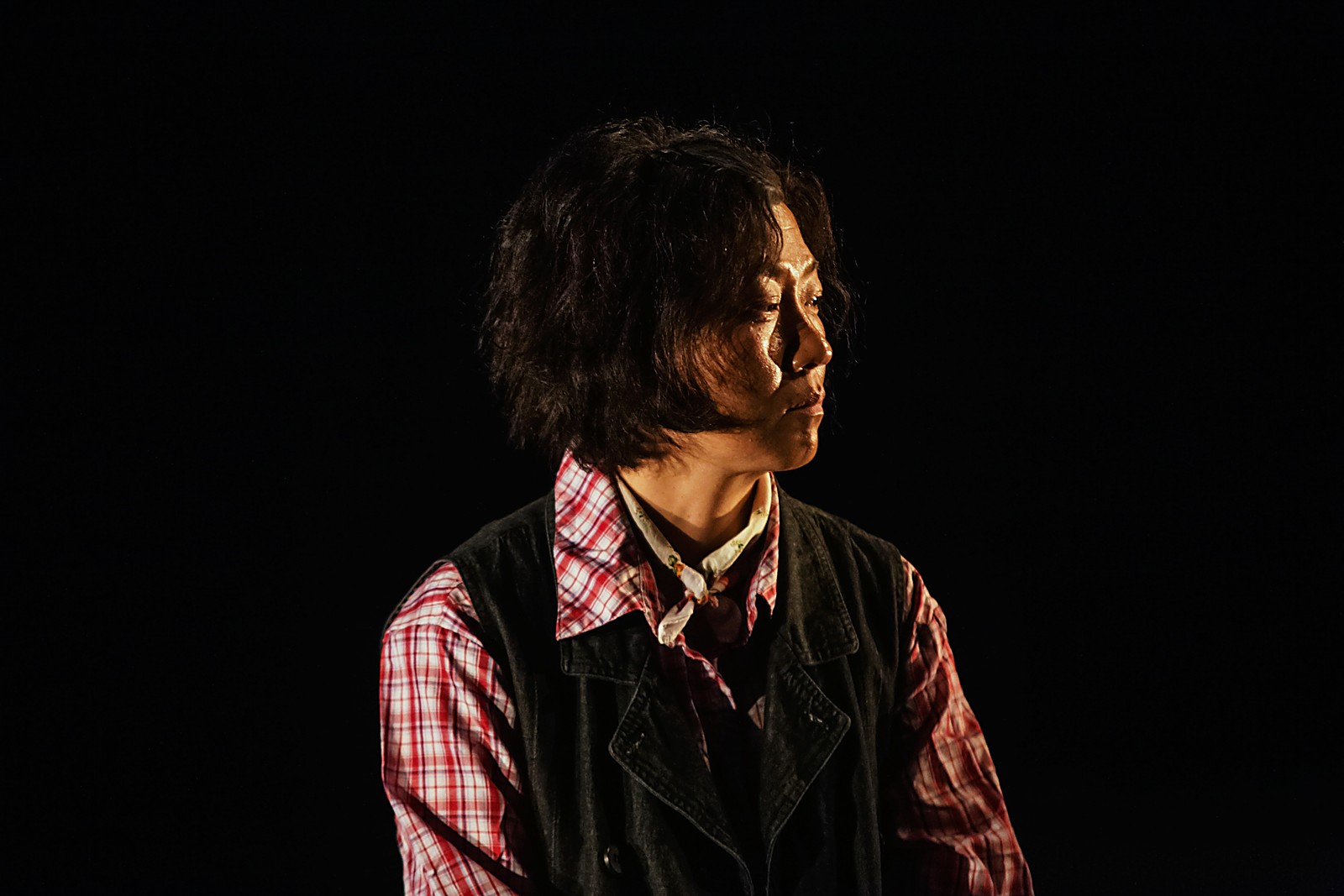
02 / 15
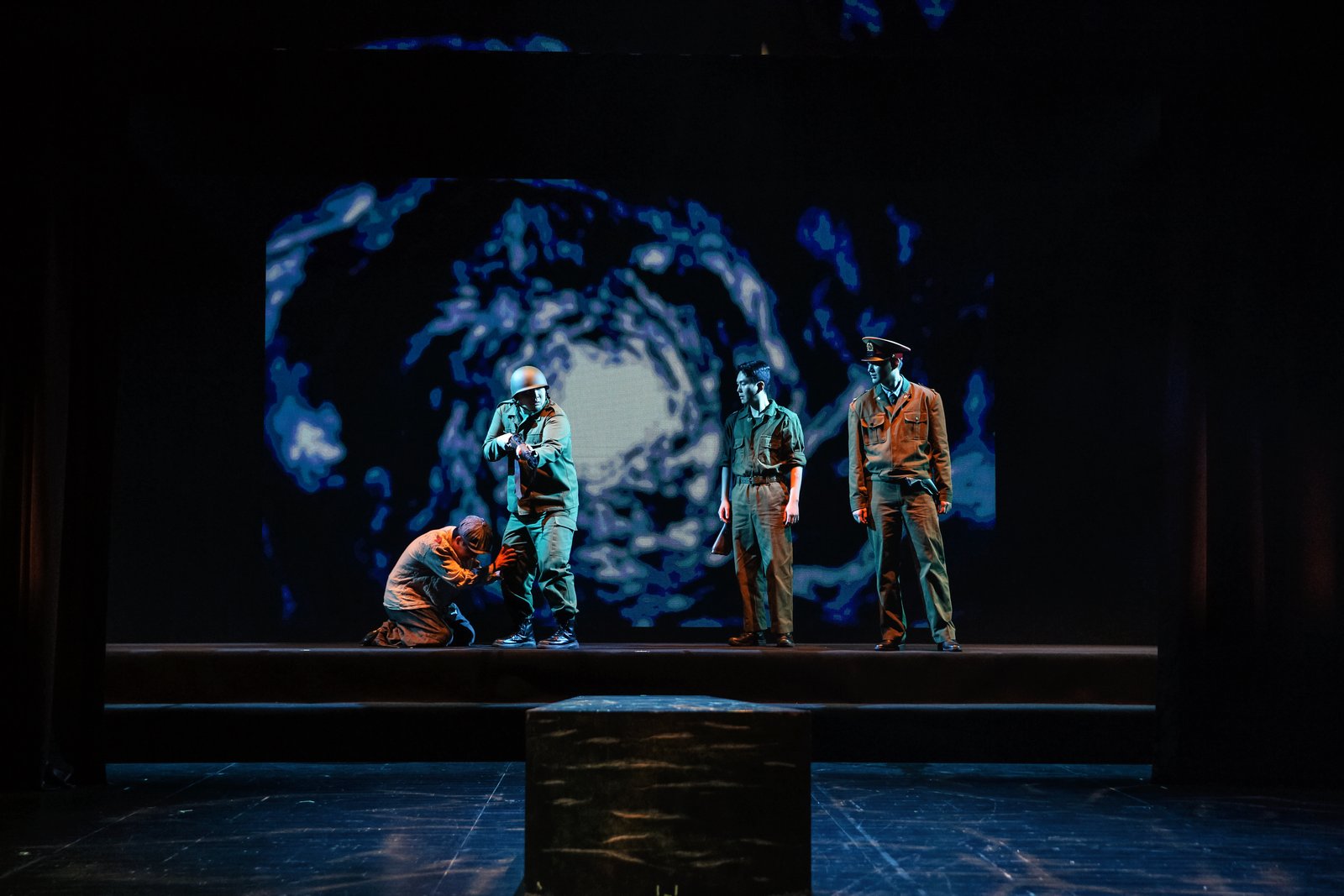
03 / 15
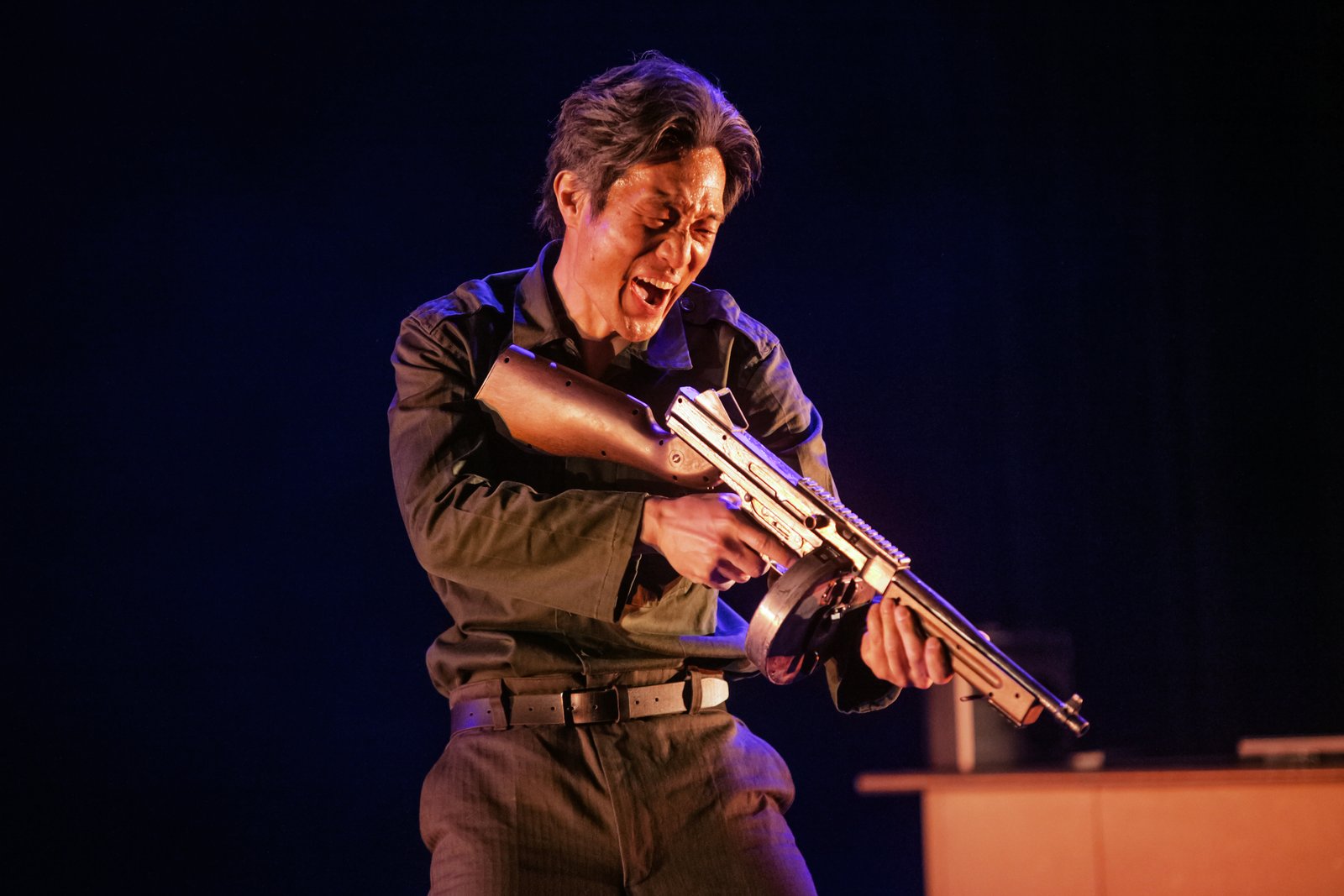
04 / 15
05 / 15
06 / 15
07 / 15
08 / 15
09 / 15
10 / 15
11 / 15
12 / 15
13 / 15
14 / 15
15 / 15
BACKGROUND
The Jeju April 3 Incident began on March 1, 1947, escalated into an uprising on April 3, 1948, and continued until 1954. It is recorded as a tragedy in which countless civilians lost their lives amid armed conflict and its suppression. Yet this history was never simply settled — for decades, it remained buried in silence and distortion.
Rather than explaining this vast history, Our Sister, Goirae looks again from within the time of one person who had to live through it — revisiting what was left unsaid, covered over in the name of ‘reconciliation.’
The play’s setting in 2003 is not incidental. Following the 2002 enactment of the Special Act on Discovering the Truth on the Jeju April 3 Incident, the government’s official fact-finding report was finalized in 2003, and the president issued a formal apology. It was the year a long-silenced memory finally began to be spoken again, in the name of the state.
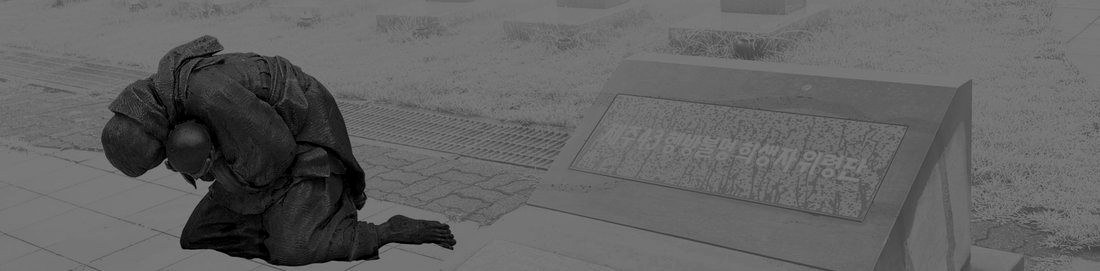
Biseol is a memorial sculpture based on the true story of a mother and daughter, Byun Byeongsaeng and her child, who were shot and killed on January 6, 1949 while fleeing a military suppression operation in the Bonggae-dong area.
“What have we remembered—
and what have we turned away from?”
The fallen statue becomes a pendulum,
swinging our time back to that day.
APPROACH
The play carries the speech and memory of those who have lived on Jeju onto today’s stage. The Jeju dialect is not a decorative marker of local color, but a theatrical material in its own right — encompassing intonation, silence, and the rhythm of song. Words gathered in the field are re-formed, through the actors’ voices and bodies, into a stage language a contemporary audience can sense and feel.
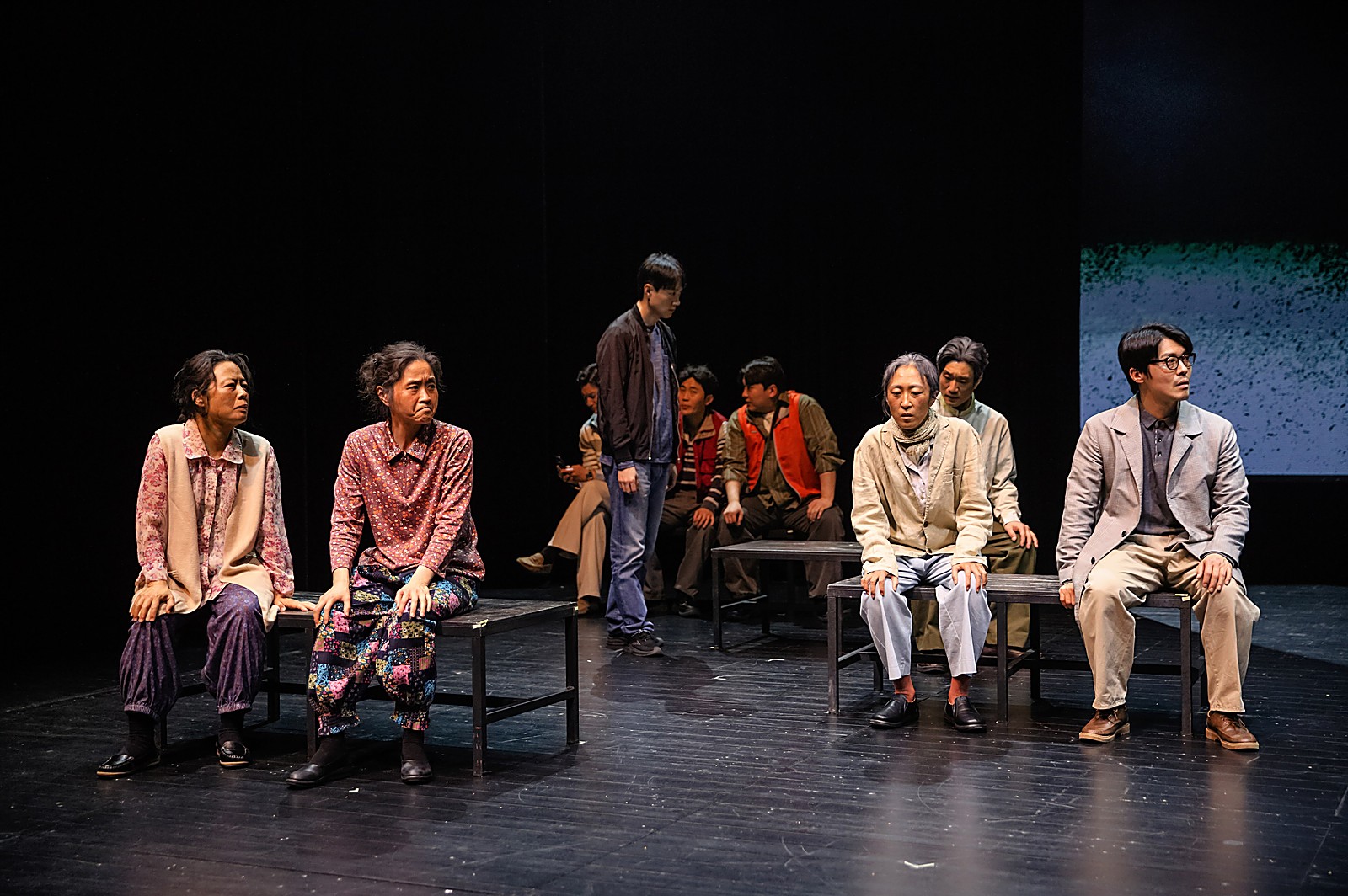
The work does not stay within one person’s memory. The memories of survivors and bereaved families, spanning different generations, are staged not as a single linear history but as a structure of collision and overlap — together asking who was able to remember, and who was unable to speak.
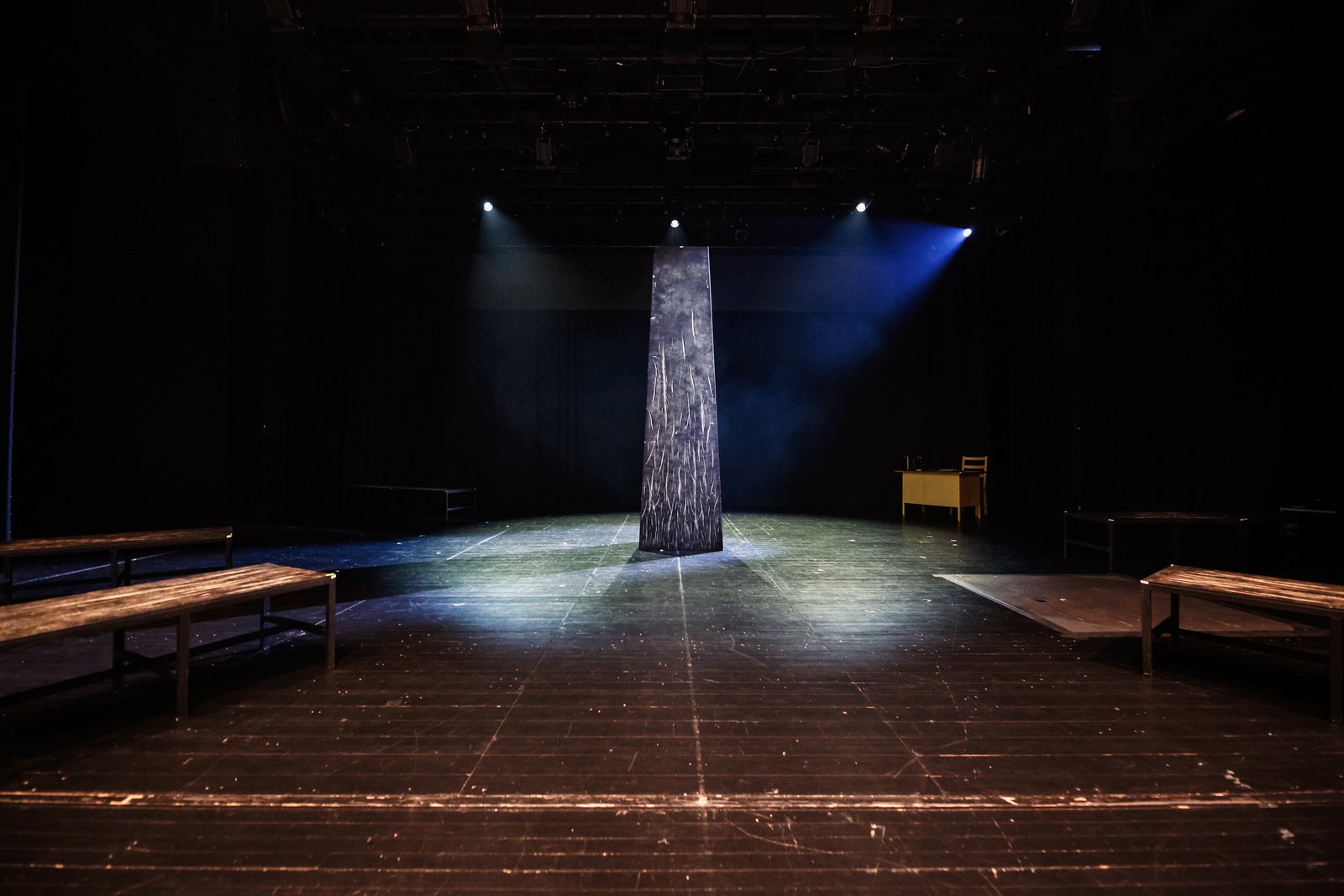
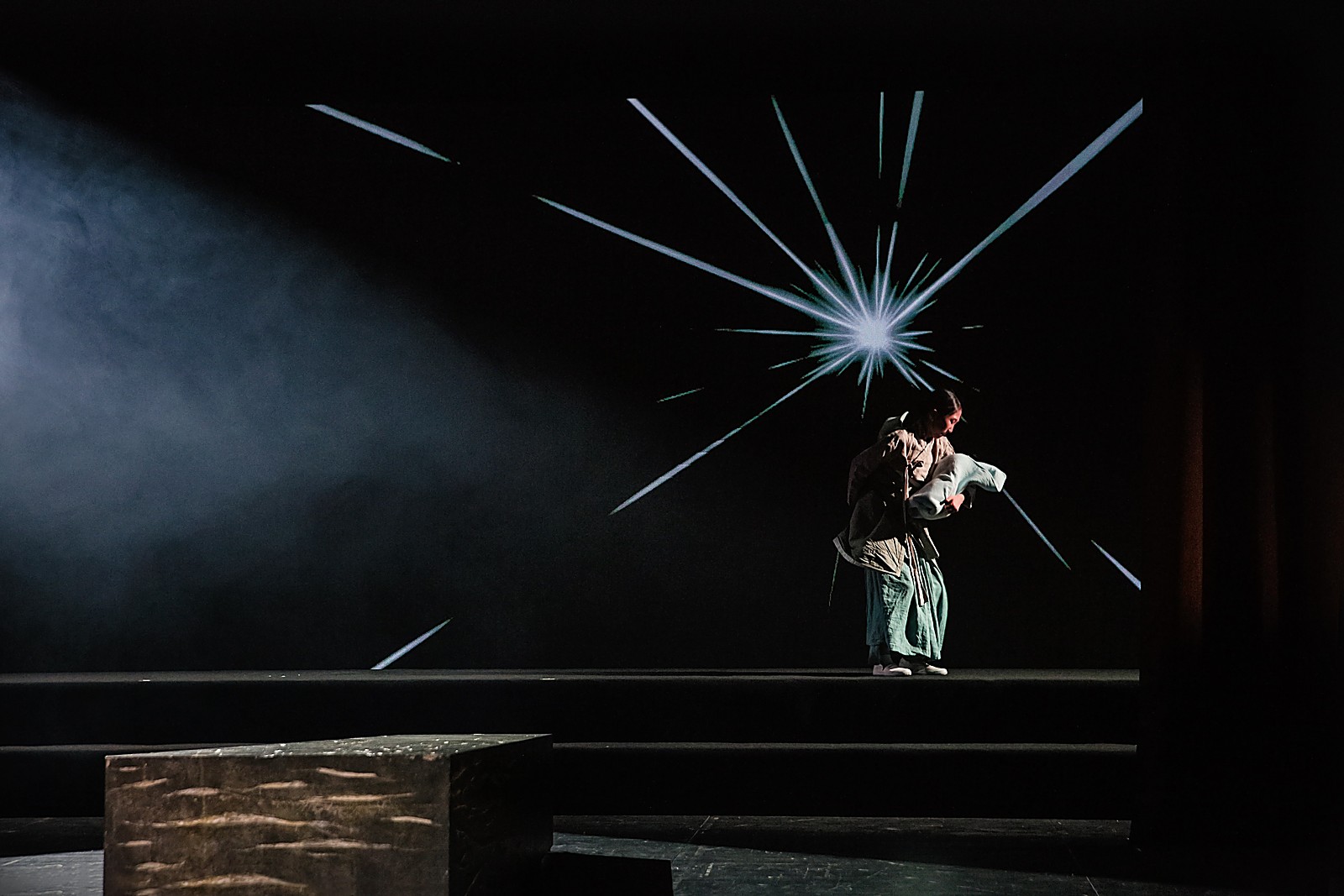
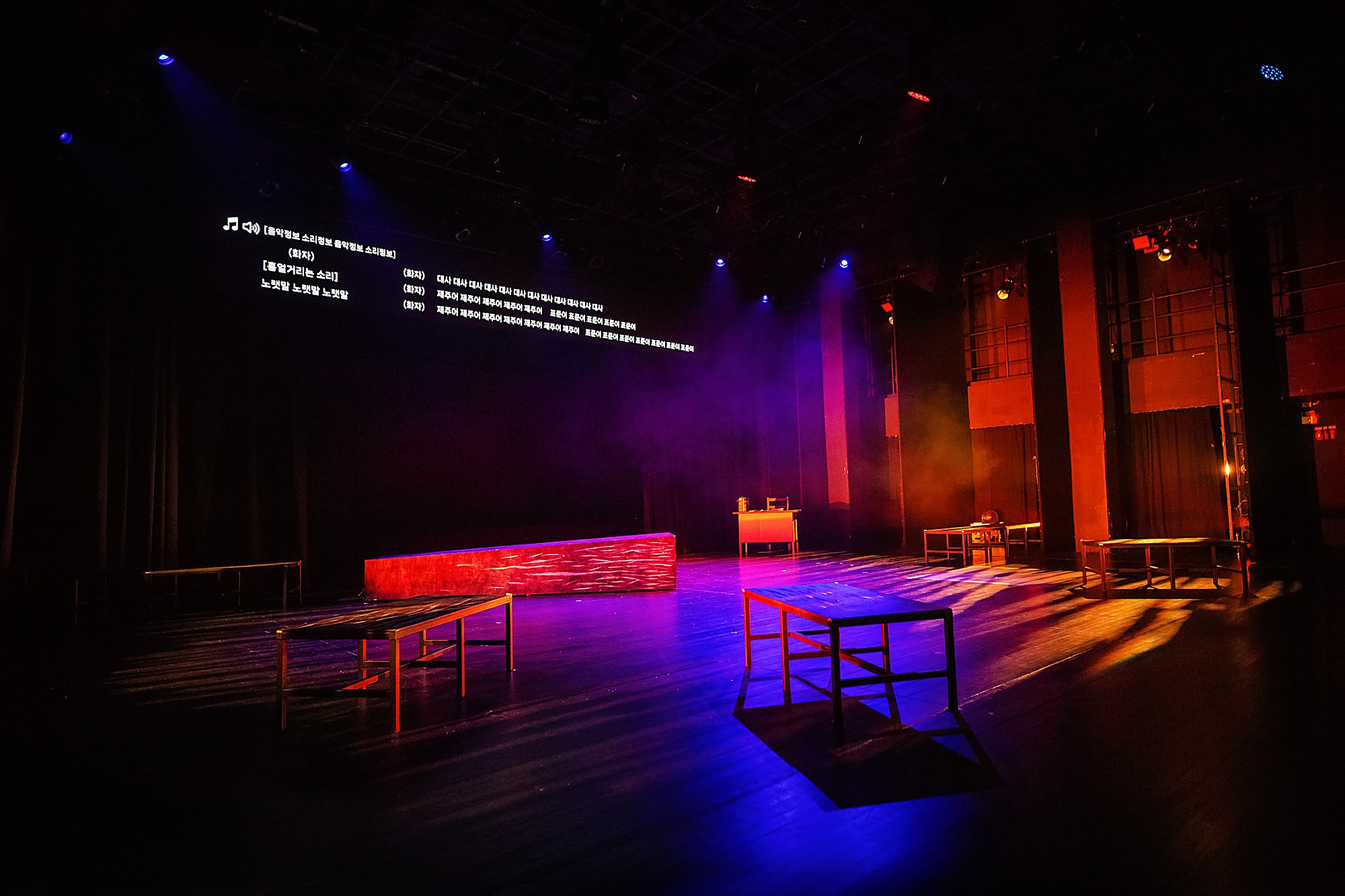
Time does not pass through dialogue alone. A rotating set piece and a pendulum, combined with projection, sound, and the actors’ movement, cause past and present to cross on a single stage — within which a historically symbolic presidential address is summoned as a scene of its own.
One haenyeo’s trial becomes, in the end, the trial of an era.
CHARACTERS
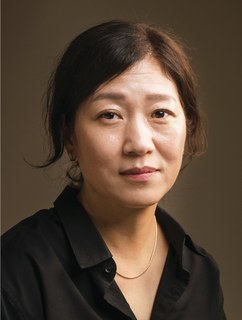
HWANG Sewon
as GO Irae
Haenyeo
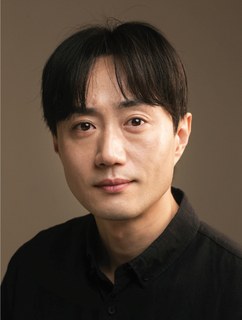
YOON Ilsik
as KANG Seonwoong
Police Officer
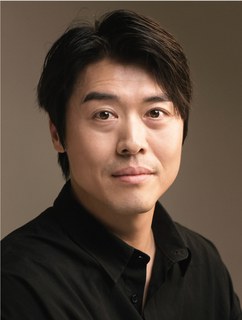
SONG Cheolho
as SONG Inwoo
Professor
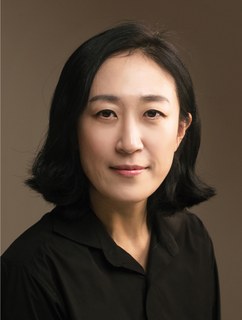
HWANG Jaehee
as BU Chunok
Senior Haenyeo
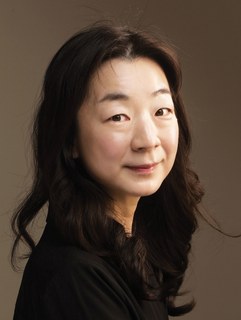
SEO Miyoung
as GO Unjeong
Teacher
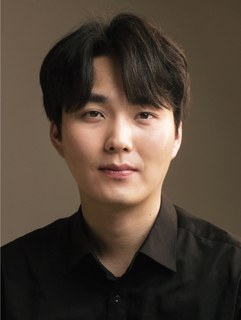
MIN Kyungjun
as YOON Sangjin
Soldier
TOURING
Universality
Jeju April 3 may be an unfamiliar name, but its pattern — state violence, enforced silence, and a belated reckoning with the truth — is an experience shared by many societies. Our Sister, Goirae compresses this universal question into a single event: the trial of one haenyeo.
A Language of Image
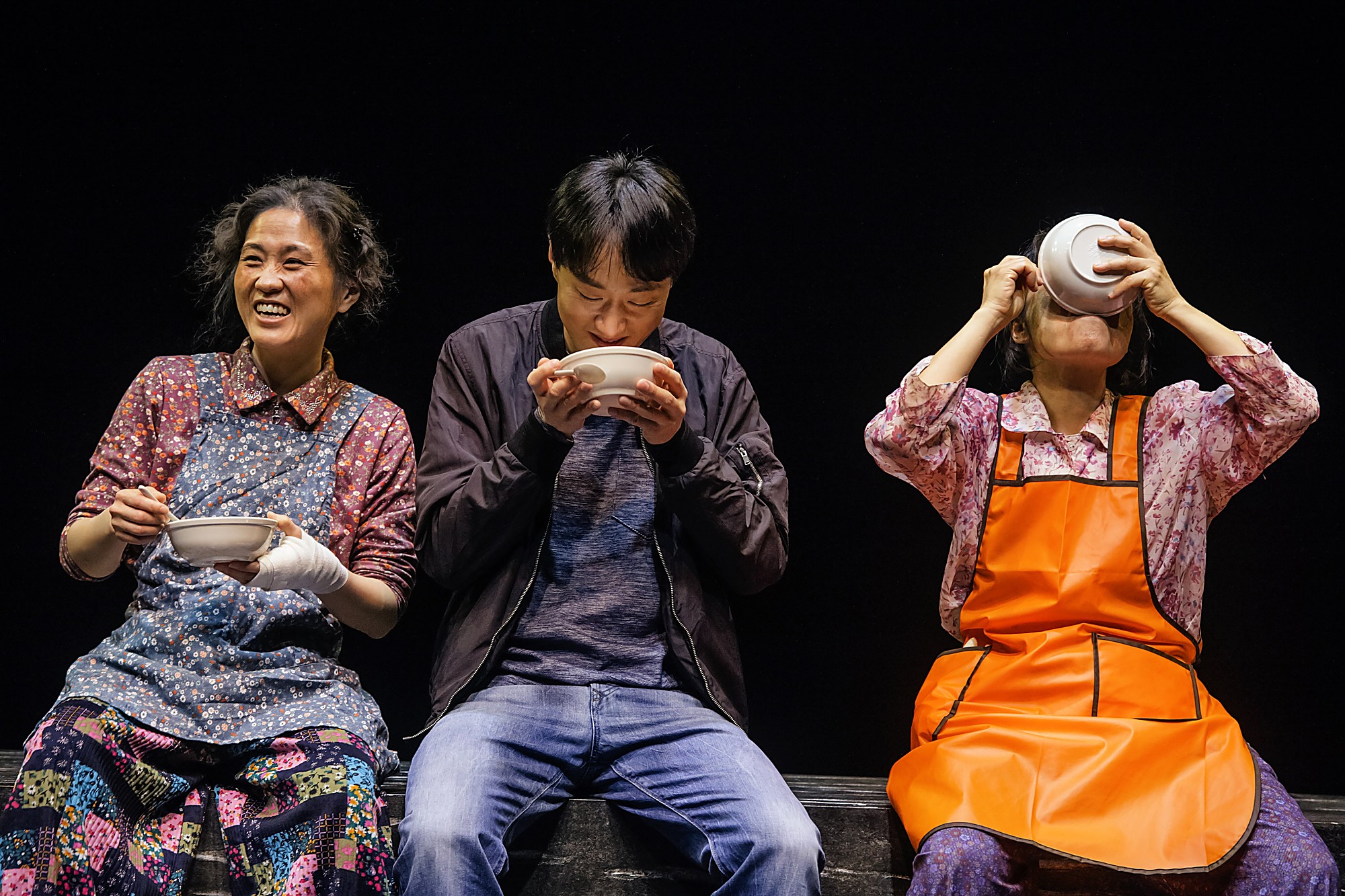
Image, the body, music, and objects build the narrative alongside dialogue — a stage language whose scenes and emotions carry across languages.
Touring Version
The production currently runs on an ensemble of 13 actors, with the cast and staging adjustable to the scale and touring conditions of each venue. A condensed touring version centered on physicality, music, and objects can also be arranged to fit the performance environment.
Selected for PAMS Pitching, Seoul Arts Market
Voices of Memory: A Theater Series on Modern Korean History
Production
Running Time
100 min
Touring Size
14 (10 actors · 4 staff)Adjusted for touring from the original 13-person ensemble.
Stage Requirements
Standard: W 14m × D 10m × H 5m
Minimum: W 9m × D 8m × H 4mAdaptable depending on venue conditions.
Surtitles
Korean O · English — in preparation
Our Sister, Goirae is one part of Production IDA’s trilogy Voices of Memory: A Theater Series on Modern Korean History. Baesogoji, from the same series, has appeared at international festivals in Egypt and Romania.
Through 2026 PAMS Pitching, the company is introducing the work to performing-arts professionals from home and abroad, and exploring partnerships for international touring and co-production.
PERFORMANCE HISTORY
2025
Premiere · 4 shows
Our Sister, Goirae
BeIN; Performance Hall, Jeju
Jeju
2026
Regular Run · 9 shows
Our Sister, Goirae
Daehak-ro Arts Theater, Small Hall
Seoul
CREATIVE TEAM
PlaywrightLEE Mikyung
DirectorKIM Heeyoung
SetJUNG Seungjun
LightingJI Soyeon
SoundHONG Bailey
VideoJANG Juhee
CLOSING
Petal by red camellia petal,
we reach out to call them back.
We weigh their anger and their
grief, and with full mourning
send them home — to the earth, to the sky, to their rightful place.
For we know that they, who have never once disappeared,
and we, who are not the least bit free, are in the end one and the same.
— Playwright LEE Mikyung,
from the Our Sister, Goirae program book
WHAT REMAINS
The performance ends,
but the story remains.
Photos, video, and records of Our Sister, Goirae
are kept in Production IDA’s ARCHIVE.
CONTACT
Let’s talk about performance, creation, and collaboration.
PRODUCTION IDA
PRODUCTION
Our Sister, Goirae
Running Time
100 min
Touring Size
14 (10 actors · 4 staff)Adjusted for touring from the original 13-person ensemble.
Stage Requirements
Standard: W 14m × D 10m × H 5m
Minimum: W 9m × D 8m × H 4mAdaptable depending on venue conditions.
Surtitles
Korean O · English — in preparation
Our Sister, Goirae is one part of Production IDA’s trilogy Voices of Memory: A Theater Series on Modern Korean History. Baesogoji, from the same series, has appeared at international festivals in Egypt and Romania.
Through 2026 PAMS Pitching, the company is introducing the work to performing-arts professionals from home and abroad, and exploring partnerships for international touring and co-production.